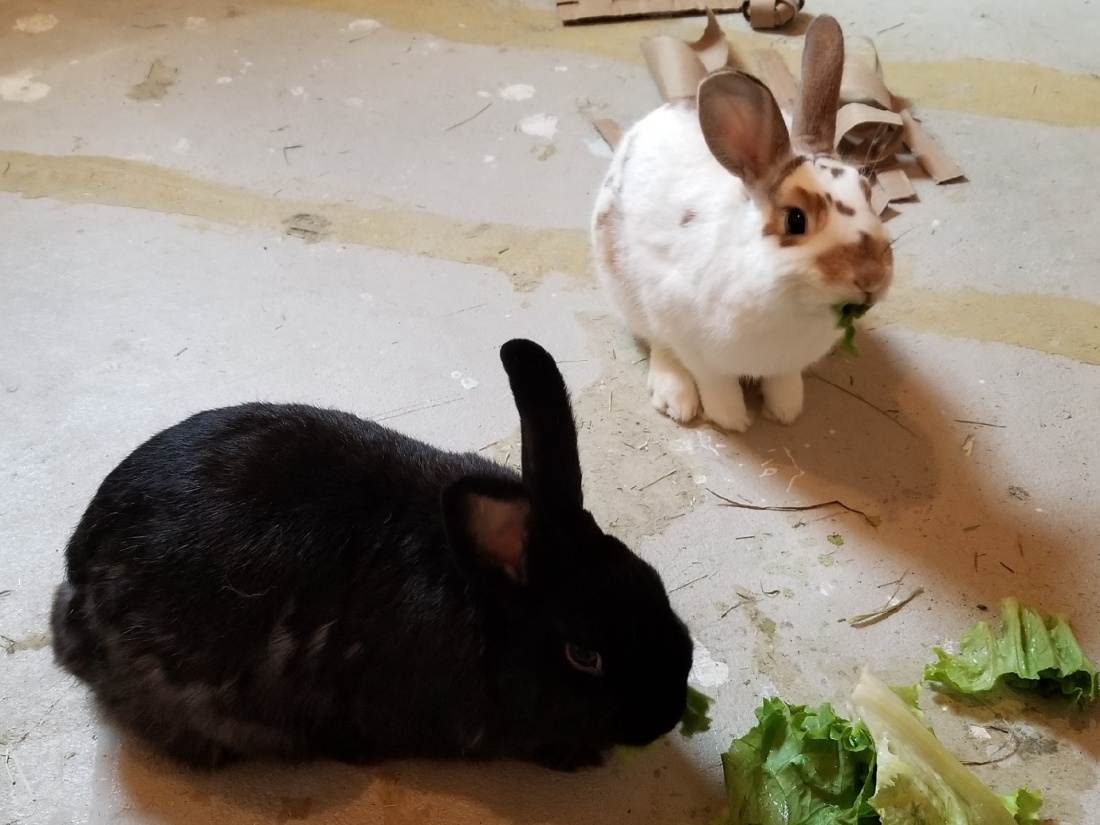
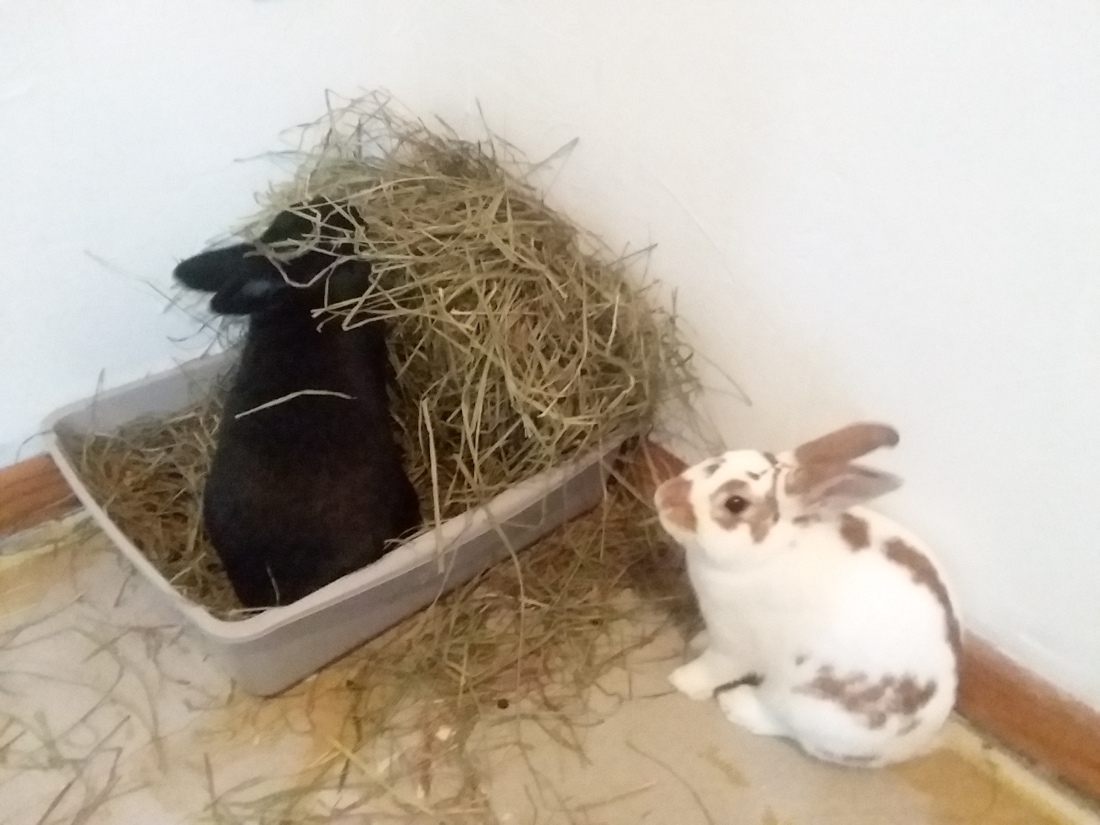
Bunny Proofing? How? What? Why?

Today will be a brief overview on what bunny proofing can really do, and what it really is. Bunny proofing is needed for every rabbit and isn’t brought up as much as it really should be. If you are considering a rabbit to join your family, or you just want one, follow along on how to keep you rabbit safe with bunny proofing.

An Overview:

Bunny proofing is using materials to block off certain things such as wires, outlets, wood, etc. from your rabbit to avoid them from being destroyed. Overall, bunny proofing should be used by anyone to keep their belongs and rabbits safe.

What is Needed?

When it comes to bunny proofing, you will most likely end up using different materials than other rabbit owners may need to use. Below is a list of possibilities:

  1.  Outlet plugs
  2. An extra x-pen
  3. Cord protectors
  4. Boxes
  5. NIC grids
  • Outlet plugs are to keep your rabbit from electrocuting themselves.
  • An extra x-pen can be used to block of a large area.
  • Cord protectors are what they say, protectors for your cords.
  • Boxes are a great way to store and protect large objects that you don’t want destroyed.
  • NIC grids are great for small areas that you want to block your rabbit from getting to.


How do you Bunny Proof an area?

  1. To bunny proof an area, you will want to look into what materials you would like to use. If you need to block things off, protect cords, or block off outlets, take that into consideration.
  2. Next find the material you would like to use and take into consideration whether you would like to note if your rabbit will want to chew on those materials. Many people will use cord protectors, which are made out of plastic. Many rabbits would still be inclined to chew it.
  3. Set up your new protectors. Feel free to try new strategies to keep your rabbit from chewing your belongings by giving extra chews for them.

Why is it so Important?

Bunny proofing can actually save your rabbit’s life. When rabbits want something to do, they will often go to their first instinct, to chew something. Some rabbits will be more inclined to chew, and others won’t at all, but I would still recommend bunny proofing in either case. Rabbits can very easily get themselves into trouble by:

  • Chewing a cord and getting electrocuted (and may die from this)
  • Chewing at treated wood (tables, chairs, etc.)
  • Accidentally sticking a nail in an outlet
  • Getting into scented territory (causing bad behavior)
  • Can overall destroy anything in their area

The tactics I’ve listed today are only a few of the possibilities out there. So many rabbit owners have taken this topic into recognition, but others didn’t. Bunny proofing is crucial for any rabbit owner, especially for free roam rabbits. I will be talking about free roam rabbits within the next couple of days. Free roaming is a great option for active rabbits and seniors as well. Bunny proofing is needed in these scenarios.

Other Recommendations

Some other concepts to be looked into when bunny proofing would be:

  • How much needs to be done?
  • Do you need to spend anything for materials?
  • Will your rabbit need to be introduced to a new concept?
  • Will plastic be a problem?
  • How cautious will I need to be?

These are some areas that are often brought up to people looking into rabbits. You may need to do some sort of remodeling for your rabbit’s space, for some that means getting rid of trim, others it would mean completely changing the room, it’s all up to your rabbit’s needs and your budget.

Other Places to Look for More Info.

If you would like to know more about bunny proofing, feel free to check out 101rabbits and Lennon the bunny on YouTube for more information. Feel free to tell them I sent you too!

As always, thank you for coming back for another post. If you would like to support me, feel free to share this blog with all of your friends and family. I plan to post a couple of days in a row these next couple of days so look out for that!

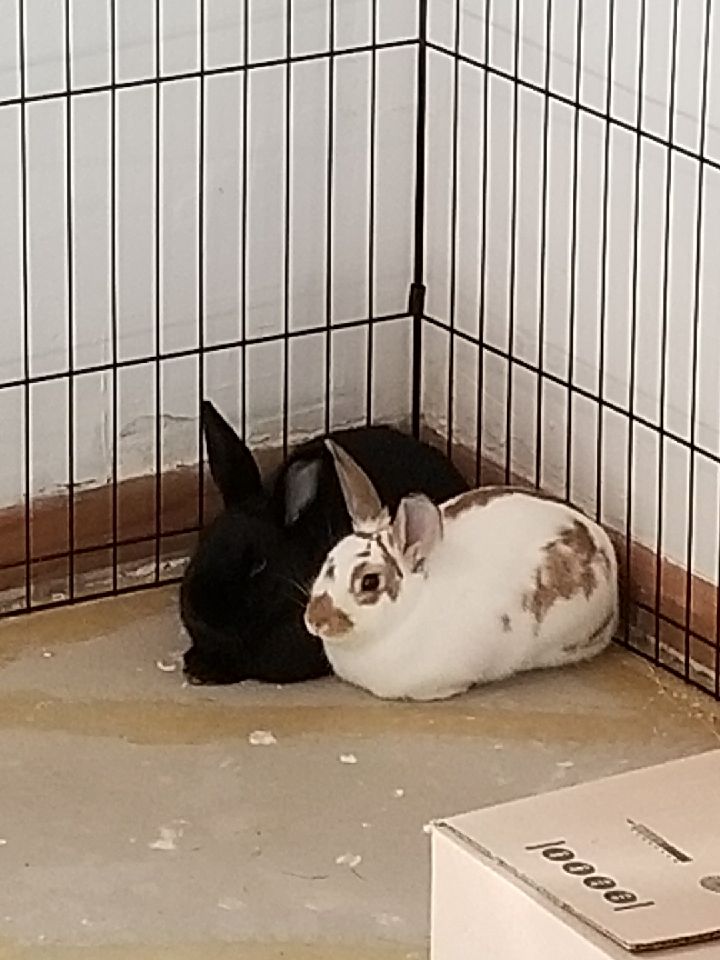
Tips to Keep Your Rabbit’s Area Tidy

Today will just be a short little summary over how to keep your rabbit’s area clean with hay, dust, feces, etc. I have made a post on how to keep your house clean with hay, so make sure to check that out.

Habits to Get Into…

  1. Clean up any messes without hesitation
  2. Don’t let cleaning pile up
  3. Make a schedule of when you will clean one thing or another
  4. Groom your rabbits regularly
  5. Don’t hesitate to try out new ways of cleaning to allow a better experience

How to Keep clean with Hay (Check out my other post for full info.)

  1. Sweep it up as soon as it starts to pile up
  2. Use different techniques to keep the hay from getting on the floor
  3. Clean the bedding more often to keep away from the hay sticking everywhere
  4. Find ways to feed the hay to prevent it from getting everywhere
  5. Observe and see if your rabbit could be making the mess worse

Like I’ve said, I have more tips and tricks on keeping hay contained, so make sure to check that post out.

Preventing Dust

  1. Sweeping up hay and keeping it fresh
  2. Sweeping and vacuuming when needed
  3. Grooming regularly
  4. Use a dust-free litter
  5. Make sure you clean in little places too

For Clarification…

  1. Sweeping the hay and keeping it fresh can help minimize the amount of hay dust getting around your house. Try to find a hay that isn’t as dusty if needed!
  2. Sweeping and vacuuming are just two ways to keep dust buildup away from concern.
  3. Grooming can actually help prevent dust. Dust can build up in areas where fur is very heavy, which is just one reason why grooming is so important.
  4. Using dust-free litter can really cut back on the amount of dust released in to air, allowing the air to be cleaner in a way.
  5. Cleaning in little places can also help prevent the amount of dust buildup as well.

How to Minimize droppings from Getting Everywhere

  1. Clean them up as soon as they are noticed out of place
  2. Get in the habit of cleaning them up as soon as you can and find ways for your rabbit to prefer using the litter box (put the hay on a different side).
  3. Take those droppings and place them in the litter box for a reference for your rabbits


Thank you for coming back again. Make sure to share this blog with your friends and family. I’ll talk to you again in two days, bye.

Do I Have to Worry About Scent Glands? How Do You Clean Them?

Today is just a little question that is common throughout rabbit owners. Today I will be going over what scent glands are, why you would worry, and what to do in some situations.

What are Scent Glands?

Scent glands are little pockets located throughout your rabbit’s body that can produce odor, or help mark territory. They are usually located on the very low stomach on each sides of their parts. Rabbits will also have scent glands under their chin.

Chin Glands

Rabbit’s chin glands shouldn’t have to every be worried about. Your rabbit’s scent glands on their chin are used to make territory. For example, say that your rabbit came up to you and chinned you, that would be an act of them claiming and loving you. If you see that your rabbit has a swollen chin, they may have irritated their glands, so make sure to take them to the vet as soon as possible.

Scent Glands

When people talk about scent glands, many will think of rabbits marking territory and causing trouble, but if you get your rabbit spayed or neutered, you won’t have a problem with that. When your rabbit is fixed, they get rid of their ability to use those glands. Some people will clean out their rabbits lower scent glands since there can be buildup, but if you aren’t comfortable doing so, see if your rabbit’s vet would be will to do so.

If you would clean their lower glands….

You would need:

  1. cotton rounds
  2. Q-tips
  3. A disposable cup with warm water

Prep…

  1. Get your rabbit ready in a carrier to be taken to a neutral territory.
  2. Set up the Q-tips and cotton rounds with the water on a surface nearby.
  3. Set your rabbit on your lap and get ready to lift up their front paws to reach their glands,

Cleaning…

  1. Once your rabbit is upright, take a cotton round, dampen it, and wipe down a gland.
  2. Do the same on the other gland across from the one your just wiped.
  3. Next, take a Q-tip and clean out both of the glands, using a small amount of water.
  4. After that, all you have to do is take a clean cotton round and wipe both of the glands down with or without water and you’re done.

If you would like to get into the habit of doing this regularly, I would clean them every      2-3 months if you would like. While you have you’re at it, why not groom and clip your rabbit’s nails if needed?

Why would I worry?

If you see that your rabbit seems to be marking their territory a lot and being territorial, even though they are fixed, you may want to consult with your vet. Some other things would be if your rabbit’s glands were swelling, then you would also have to talk to your vet about that.

Solutions to most problems…

Vets. In every single post I tend to refer to vets as an answer, but it’s true. If you have a question, ask your vet. If you need help with your rabbit, ask your vet. If you want suggestions, ask your vet, they know how to handle it.


How to Use Some Materials From the at Home Medical Kit

Today will be focused on the post that I had published two days ago, and how to use some of these objects that I have listed. By the way, I have made some additional changes to that post, so make sure to check that out.

Why This Matters

When you are given something to use that isn’t familiar to you, odds are, you will go to instructions for help. Imagine what it would be like in one of those situations, but without the instructions. Some of these materials that I have mentioned in my past post will be new to some, and familiar to others. I did a lot of explaining of what these objects really do for you and your rabbit’s so make sure to check that out.

  • Syringe
  • Baby Food
  • Critical Care
  • Chlorohexadine
  • Gauze
  • Digestive Tablets
  • Bug repellent (Made for rabbits)
  • A massage device of some sort
  • Thermometer
  • Petroleum Jelly
  • Pedialyte

Seem Familiar? For some of these explanations, I will just guide you to a source that either has information on it, or will help you with something related to it.

Syringe: I have mentioned this before, but not in depth. Basically, you would fill up your syringe up with some sort of force feeding formula and stick the tip of the syringe in the back corner of your rabbit’s mouth and slowly start to ease the formula into their mouth. Some rabbits will take force feeding great, others, not so much.

Baby Food: I already have a post all on baby food, so make sure to check that out, but otherwise, all you do is use the force feeding method I just taught you.

Critical Care: Critical Care is just a little different than what baby food would be. With critical care, it has directions on the back of how to mix it up and feed it, so make sure to follow those directions. Keep in mind the force feeding tactic.

Chlorohexadine: I already have how you water down, apply, and prepare chlorhexadine in my sore hocks posts, so make sure to look into those.

Gauze: I’ve already explained how to use gauze briefly in my last post, but basically all that happens is that you just gently wrap the wound in the gauze and secure it with some sort of adhesive that you can trust your rabbit with.

Digestive Tablets: They have feeding instructions on the back of the container/package.

Bug Repellent: Your rabbit veterinarian should give you directions, but in doubt, either ask, or see if there are instructions on the back of the packaging.

Massage Device: I’ve already sort of explained this, but what you would do is turn on the massage/vibrating device of some sort and allow it to gently rest against your rabbit for just a couple of minutes at a time t give them small breaks.

Thermometer: Personally, I’ve never had to take a rabbit’s temperature, but you would apply the petroleum jelly to the tip and simply insert up to where the jelly ends.

Petroleum Jelly:  As explained, apply a thin coat to a clean thermometer stick that will be going inside your rabbit.

Pedialyte: As for pedialyte, You will most likely want to give in small amounts through a syringe, but I would consult with your rabbit’s vet before even giving the pedialyte.


Thank you again for coming back for another post. Make sure to share this with your friends and family and I will talk to you soon, bye.

At Home Safety Kit

It’s only been a couple of times, but I have mentioned an at home safety kit before. There are so many things that you will want to have, or get over time for any emergency.

Materials

  • Syringe
  • Baby food
  • Critical care
  • Chlorohexadine
  • Gauze
  • Digestive Tablets
  • Bug repellent (Made for rabbits)
  • A massage device of some sort
  • Thermometer
  • Petroleum Jelly
  • Pedialyte

Why?

  1. Syringe- Used to force feed.
  2. Baby food- A food to force feed.
  3. Critical Care- A force feed formula made for rabbits.
  4. Chlorohexadine- To water down and soak in case of sore hocks.
  5. Gauze- In case your rabbit would happen to get a scrape or rip a claw.
  6. Digestive tablets- They can be given as treats, but can be used in case your rabbit is allowing solid foods during sickness.
  7. Bug repellent- In case you bring your rabbit outside for playtime.
  8. A massage device- In case your rabbit has GI stasis and you want to use it against their stomach to help break down food.
  9. Thermometer- To take your rabbit’s temperature in any case.
  10. Petroleum Jelly- Used on the thermometer.
  11. Pedialyte- Used when your rabbit is having trouble keeping hydrated.

Examples, Scenarios, and other sources to look through

Syringes: Your rabbit will need it for GI stasis (force feeding). I have made multiple posts on details with force feeding, GI stasis, and other details on sick rabbits.

Baby Food: It is used for force feeding in case your rabbit won’t accept solids while they are sick, such as having GI stasis. I have made a whole post on baby food so make sure to check that out.

Critical Care: Critical Care is used as a force feed, like baby food, but is made for rabbits. If your rabbit ends up with GI stasis, force feeding can help your rabbit hold in there while you get ready to go to the vet.

Chlorohexadine: Chlorohexadine is a solution used for when your rabbit gets sore hocks. I have a posts on the ratio, how to do it, and any other details needed.

Gauze: When your rabbit is still young and active, they will tend to be prone to getting them self into trouble. If your rabbit happens to cut or scrape them self, you could use the gauze. Gauze can also be used if your rabbit would tear off a nail.

Digestive Tablets: Digestive tablets are a great little treat to give if your rabbit is going through GI stasis and you want them to start eating solids, or some sort of healthier food. They can be given as a regular treat as well, possibly helping the prevention of GI stasis in your rabbit.

Bug Repellent: Bug repellent isn’t what you probably would have thought of, but it is important. If you want to bring your rabbit outside, you need bug repellent. When I say bug repellent, I mean tick, flea, mite, and, mosquito repellent that you will want to get from your vet.

Massage Device: I’ve already explained this, but if your rabbit has GI stasis and they are having trouble digesting and passing their food, you can use some sore of a vibrating massage device to help break up the food that isn’t being digested properly.

Thermometer: It’s pretty obvious. If your rabbit seems a little overheated, you can take their temperature and make sure that they are fine. I will be posting very soon on how to use some of these items.

Petroleum Jelly: It is used on the thermometer when you take your rabbit’s temperature. I will go more into depth in a different post.

Pedialyte: Pedialyte is used a quite a bit in the summer for rabbits who struggle getting the correct amount of water and hydration. (Always consult with vet)


As always, thank you so much for coming back once again. Make sure to look back on my past posts so that you will be able to get into any detail I may have mentioned before, but may not have been said in this post. If I missed any materials, make sure to comment below so that I can help you out. I post every other day and will talk to you then, bye.

How to Deal With Shedding

Rabbits shed way more than you would ever predict. So in that case, today I will be going over some ways to cope with your rabbits shedding.

Containing the fur…

When it comes to grooming your rabbit, you will soon realize the mess you will be making of anything near where you are going to groom your rabbit. Rabbit fur is very thin and silky, allowing it to get up in the air very easily. Here are a few ways that you could help maintain the fur…

  1. Use a towel under your rabbit. When you use a towel underneath them, you will find that the towel catches the fur and helps eliminate the amount of fur that you will find throughout that area. Make sure that the towel you use is an old one, or one that you have specifically for grooming your rabbit.
  2. Use a bag to keep the fur in one place. Rabbit fur actually tends to be pretty adhesive towards plastic bags. I find that when you are around a larger shedding season, that it really helps to have a plastic bag devoted to being filled with rabbit fur when you groom. Your garbage would work as well, but the fur could still catch air in some circumstances.
  3. Wear clothes that won’t attract the fur or show that you are covered in fur. Wearing clothes that will easily attract fur during shedding season is horrible. Even if you aren’t grooming your rabbit, you will still end up with fur all over you. During shedding season, I would recommend wearing lighter clothing to avoid the look of being full of fur, and to just double check that you have a lint roller just in case.
  4. Groom your rabbit regularly. When I say regularly, some may think that’s everyday, some may consider that as a one big grooming session a week. I personally find that it works best for my bunnies to groom them at least once a day during sheds to minimize the stray fur.

Preparing…

When you groom your rabbit, be ready for some surprises. You will find that your rabbit will shed more fur than you would ever think. I have a picture of Oliver when he was shedding, and you will see that his shed lines match up with his rib cage. In areas that have many bones, make sure to be extra careful.

  1. Like I’ve said, wear proper clothing.
  2. Lay down the towel in neutral territory.
  3. Have a bag or a garbage to keep the fur.
  4. Choose your brushes.
  5. Pluck any loose fur before going in with a brush.

Some side notes…

  • On average, rabbits tend to shed two large sheds and two little sheds in a year, but that could vary by rabbit.
  • While you are grooming your rabbit, make sure to check their skin every now and then to make sure that it isn’t getting irritated.
  • If you find that your rabbit has a lot of loose fur left over, very lightly dampen your hand and run it across your rabbit’s back to get rid of the loose fur, and collect it on your hand.
  • Make sure to get at your rabbit’s head, feet, and stomach as well. You wouldn’t realize how much fur will actually come off. Rabbits tend to shed in main areas, but will have some other areas that aren’t as payed attention to, such as the stomach that accumulates a lot of fur.

If you would like me to do a post on different techniques and materials to use, along with what I do for my rabbits’ grooming routine, make sure to let me know and I will get back to you. Remember to come back every other day for a new post and don’t forget to share this blog with others, bye.

Like I was saying before, you can see on the left was when Oliver was in a shed, and on the right, when he wasn’t.

Different Ways to Feed Hay

Today is a more straight forward post. If you are wondering why this is such a big deal, you may not realize that many senior rabbits will loose appetite of their hay. There are so many ways to entice them to eat their hay to avoid as many sicknesses as possible.

Usual Ways

  1. Hay Racks. Obvious as ever, hay racks are great to maintain the hay and keep hay from getting everywhere. Hay racks can also reduce the amount of wasted hay. I used to have to waste an entire litter box of hay and a load of litter because the litter box filled with hay so quick that I had to take the litter boxes out early, until I made my hay box.
  2. A pile in the corner of the litter box. This is what I used to do until I made my hay rack. Some people find that this works great for them, but you will waste quite a bit of hay. Your rabbit will usually urinate on it and before you know it, their food became litter.

On the left is a model of the hay box and on the right is what it looks like with the pile of hay.

For Fun…

  1. Stuff the hay into a toilet paper tube. This is a great way to feed hay if you just want to give some in their cage, but want to encourage them to play a little in the process. I find that when rabbits eat hay out of toilet paper tubes, they enjoy gnawing on the tube as well, which can help their teeth.
  2. Put it in a basket. Many rabbit owners who enjoy cage themes will be seen using this method. You will find that a lot of YouTubers will use willow tepees and flip them over to be a basket for hay, and to gnaw on. I’ve also seen rabbit owners use treat or treat buckets as a hay bucket for their cage theme. If you would like to use this method, make sure that the material of the basket will be safe for your rabbit, especially if the bucket is a soft plastic, or if your rabbit checks plastic.
  3. Leave it in a pile on a easy-to-clean surface. If you leave your rabbit out for a long time during the day, this is for you. Many rabbits will enjoy eating hay out of a pile on the floor, and will go to the litter box if needed. Many rabbits will find this fun and will enjoy having an easy access to their food. Remember that hay is messy and that you will want to clean up the dust afterwords.


For the Seniors

First of all, senior rabbits can actually be very picky, so your rabbit way react way different. Neither of my rabbits are seniors so I don’t have anything to relate to besides people that I know that do have senior rabbits.

  1. Feed with herbs. Many dried herbs are sold for rabbits on online shopping sites. Many people will use herbs in their senior rabbit’s hay to entice them to eat. Some rabbits will pick through to find the herbs, but will eventually start to eat the hay.
  2. Mix different types. Many rabbits will start to loose weight by the time that they become a senior. I’ve found that many rabbits appreciate different types of hay, along with some herbs. If your rabbit is in need of some weight, go ahead and feed some more fatty hay. Examples of fatty hay: Oat hay, Alfalfa, or mixes that contain clover or other natural toppers that may be in their hay.

As always, thank you for coming back for another post. Make sure to share this blog with your friends and family and I will talk to you next time, bye.

How to Make a Diy Hay Rack & How Mine Turned Out

I mentioned this topic a while back and promised that I would give you a post on all of the details of my hay rack I made (with the help of my father).

Materials…

  • 6 plywood panels  (a top, 2 sides, a front, a bottom, and the back)
  • Hinges
  • A saw of some sort to cut a hole
  • Nails/Screws
  • Screw driver/Hammer
  • Sandpaper
  • Measuring tape
  • An outline
  • The measurements of the litter box it’s going by


Prep…

  1. Draw out the outline
  2. Cut the sides, lid, front, back, and bottom piece
  3. Figure out what size diameter you want the holes to be. We used “4” diameter


Construction…

  1. Start off by cutting the holes out for the front
  2. Connect the sides, front, and back
  3. For the bottom, connect it a little under the holes to assure that your rabbit can reach the hay, ex; if the holes are drawn out, the bottom panel would be connected a little under where the holes are.
  4. Connect the hinges to the box and connect the lid to that
  5. Sand down everything


How Mine Turned Out & Details

Personally, I think mine turned out great. The lid was designed so that we could have a grip area for the opening and closing part. I’ve found that through the last couple of days using it, that the bunnies aren’t wasting as much hay. I’ve also found out that 4″ in diameter is big enough for our bunnies to hop in and out of, them being medium sized due to the sanctuary they were raised from.                                                                              20190128_094827

This is what the hay box turned out looking like. The bottom panel is about an inch or so under the base of the holes. I’ve found that this is actually a very simple process that I would love to go through again. If you would like me to go more into detail on how I planned this out, feel free to let me know.

What Should You Research For?

I’ve recently been mentioning research and some things to incorporate, but I never really gave off what you should be looking for and why.

Setup

When you do research, you will want to put things into categories such as, food, grooming, medical, safety, routine, and cage.


Food (Check other posts)

  • Hay – cuttings, types, what your rabbit will eat
  • Pellets – what should be in it, types, etc.
  • Treats – what you should give, store bought, DIY
  • Diys – you can DIY treats

Feeding Amounts…. Veggies, Hay, Water, Pellets, & Treats

  • Age
  • Do you want to feed pellets?
  • Types of veggies
  • Alternatives (Toppings… veggies)
  • Hay rack size


Grooming (Check other posts)

  • Brushes
  • Nail Clippers
  • Sore Hocks
  • Health Check Materials

Types/Other Info.

  • Brushes – DIY, hairbuster, rubber curry comb, etc.
  • Nail Clippers – cat clippers
  • Sore Hocks Materials
  • Health Check – How to, what to do, scent glands, etc.


Medical (Check other posts)

  • Vets
  • At home safety kit
  • Sicknesses

Look into…

  • Where are you going to go for a vet
  • What to put in a safety kit
  • Home remedies for sicknesses


Safety (Check other posts)

  • Carriers
  • Bunny proofing
  • Cage area

Look into…

  • What type of carrier you want
  • What you need to do for bunny proofing
  • Any problems that might come up with your planned cage area


Cage (Check other posts)

  • Where you will put the cage
  • The cage itself & litter boxes
  • Any other instances… other pets

Types, etc.

  • Proper flooring/bedding in that area
  • Hutch, DIY, free roam, etc.? Type of litter box, size?
  • Will your pets need to be majorly separated, problems?


Routine (Check other posts)

  • What to feed?
  • What time?
  • When to take out litter boxes

Best time…

  • Pellets, hay, water, veggies, treats, possibly medicine
  • When you wake up/go to bed?
  • Based on size, etc.


Thank you for coming back once again for another post. Feel free to go back a couple posts or so and do the test that I posted a while back and make sure to look through any posts that you need as well. Make sure to come back every other day for a new post and I’ll talk to you next time, bye!

How To Convince Your Family to Allow a Rabbit

Today is a more simple concept. Many people will use the same sorts of tactics as they would on other situations and animals, but I think that rabbits are a little different. People constantly underestimate the amount of work and effort that is needed while owning a rabbit, which is what I will be explaining today.

The 5 Main Steps…

Research. You will be told by pretty much every rabbit owner, if not all, that research is the #1 step before ever getting a rabbit, which is my job to help you with.

  • While you research, make sure to look for things such as care, feeding, breeds, adoption, and any possible situation you would need to know about.

Situation. If you are in a situation that you won’t be able to take care of a rabbit properly, do not get a rabbit. You will want to look into…

  • Housing, bunny proofing ( I will be bringing that up soon), etc.

Life-style. Do you have any animals that could be potentially dangerous, or something going on that may be dangerous?

  • Make sure that if you have any other animal, that they will stay away from each other. I would recommend looking into prey and predator relations with these two pets.

Preparation. Preparation is key when owning any animal. If you want to look good and feel confident that a rabbit is right for you, you will have to show that you know what you need and that you have back-up.

  • I recommend looking into ways to convince your parents by looking into articles, videos, etc. that talk about convincing to really  make you feel that you have things down pat. You will want to think of where your rabbit is going to live, situations, and how things will work out.

Presentation. When you really present your idea to your parents, make sure that you look for all of the positives. I find that when you show all of the good things from rabbits, that they will throw away the thought of problems that may come up which they will just have to ask you about.

  • Be prepared to have a small argument. If you want a rabbit, you will have to wiggle in time to talk to your parent and really show the good in owning rabbits. Don’t forget to be respectful, even through arguments.

Good Signs

When looking to get something that you want through convincing sounds like the only way, all you want is for your parents to agree and that you just get what you want. Even if your parents don’t agree, here are some good signs that your parents are starting to like the idea.

  1. They talk to you about it. When your parents don’t want you to have something, they will just stop talking about it, hoping that you forgot, which probably wouldn’t happen because you want what you want. You know things are good when your parents bring it up, even if they bring up negatives, they just want to work through them.
  2. Your parents start looking through your research. One day, you may either find your parents looking through them even if they didn’t ask, or they may just come and be like, “Hey Billy, can you show me that research you’ve been working on?”
  3. You parents start to talk to you about where you are going to keep them. This is the biggest hint of all time. As soon as our parents ask where you want to keep them, you know they plan to let you get a rabbit.

Bad Signs

Sometimes your parents just aren’t ready for you to take on a huge commitment for an animal and find it better to stay away from animals entertaining you. I honestly feel bad for anyone who has been told no from the start.

  1. Your parents don’t talk to you about it. They are waiting for you to get over it and hope you just forget. Obviously, you should never give up because they might eventually give in.
  2. When you ask them a question, they try to ignore you. This is what would always happen to me. I would ask my mom if it was fine to keep a rabbit, or adopt this rabbit, etc. and it would result in her trying to ignore it, yeah, she gave in.
  3. When the answer to everything becomes no, similar to when you were a preschooler. With my experience, it would usually go like this. I ask my mother if she’s fine with me getting a rabbit, she doesn’t answer. So then when she finally responds and makes something up like, “Sure you can get one in spring,” and it turns out to be true, yeah, they can’t take it back.


The thing with wanting something is that you just keep going for it. That’s what I encourage you to do. I encourage all of you to go and reach for your dreams. I never though I would get a rabbit. It took two years of research, convincing, and working things out for things to work, it was 100% worth it. Feel free to check out my test on whether you are ready for a rabbit. Anyway, I’ll talk to you next time, bye.