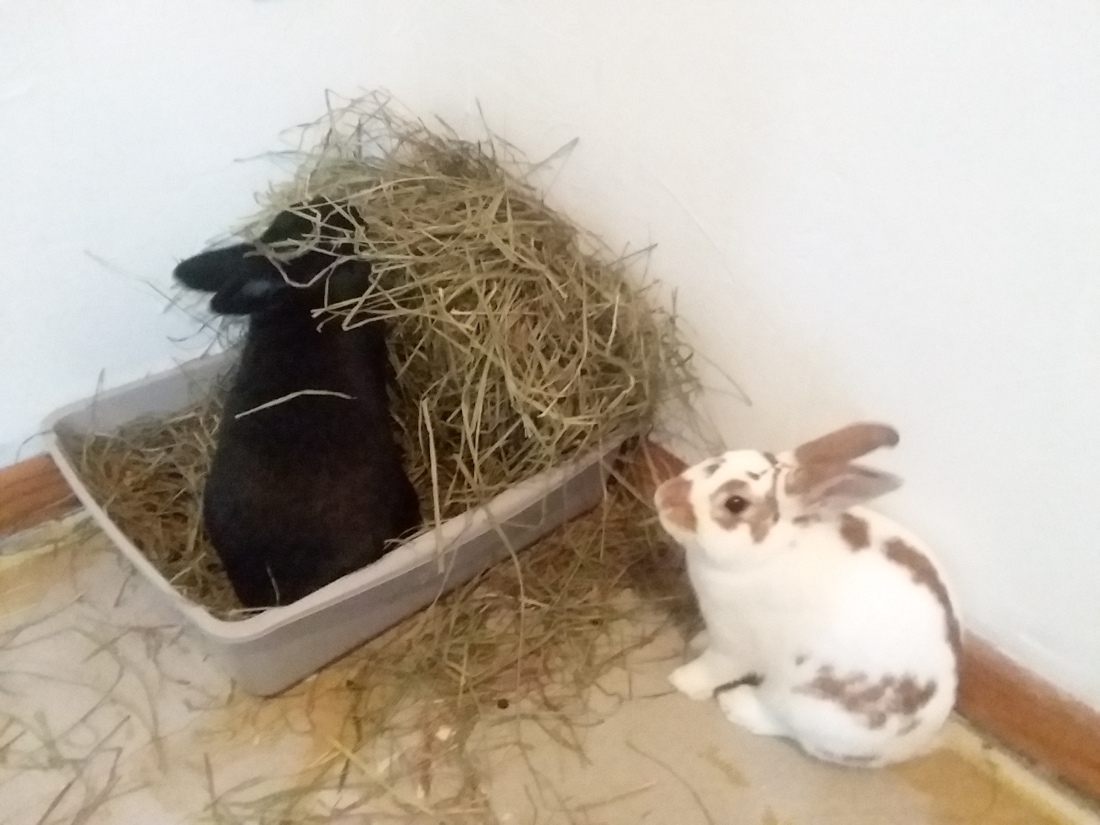
Cuttings of Hay

What do cuttings of hay mean?

When you have let’s say first cut timothy, that means that is the first time the farmer cut hay off that field that year. Depending on your Summer, your area may have better hay and more cuttings than other places.

What are the differences between cuttings?

When you have different cuttings, there are many things that you will find different. This includes texture, stiffness, softness, and possibly smell. 1st crop tends to be more stiff, but is the most fibrous due to the nutrition it absorbs from being 1st crop. 2nd crop is partially stiff and partially soft, which leaves 3rd to be nice and soft, great for picky hay eaters. The softer, the less fibrous.

Which cutting is the best?

1st: If your rabbit isn’t a picky eater, or prefers the stiff pieces like my rabbits, this is the way to go. 1st cutting is also great for rabbits sensitive to GI stasis, and that shed a lot. With the fiber amount in the hay, it will keep your rabbit’s GI track going.

2nd: If your rabbit is a little picky and likes to pick and choose through their hay, this will be the great cutting for you. 2nd cutting has some stiff and some soft, great for mildly picky eaters… this still supports the GI track pretty well.

3rd: Of your rabbit is very picky and you still want to get timothy hay, 3rd is good for you. 3rd cutting doesn’t have very much fiber, so mixing 3rd with some 2nd cut would be very beneficial for your rabbit’s health and well being.

What about orchard grass?

Orchard grass is the best hay for very picky rabbits. The thing with orchard grass, is that it doesn’t have much fiber, so mixing it with 2nd cut Timothy would be a good idea for those concerned about GI stasis.

Thank you so much for coming with me on this journey. If you know anyone who has a rabbit, wants a rabbit, or is getting a rabbit, share this blog channel with them. Please share with your fellow rabbit lovers too! Feel free to go back and check put my other posts. Thanks.
How to Find Realiable Hay Providers

When it comes to rabbit topics, I always manage to bring up hay…. somehow. This is because it is the most important thing in a rabbits diet, right beside water. Hay is what supports a nice healthy life for a rabbit. I’m sure I’ve touched base on hay providers before, but never devoted much time to it.

What makes a provider realiable

A hay provider that is realiable gives you they hay you want, gives you healthy hay, cares about your thoughts, and also takes in your experience, good or bad. Many people rely on online sources, which are great but decieving. You aren’t there to see if it’s good quality and most of all, if it’s suitable for you. This is when farms come in.

Farm hay

When choosing a rabbit hay provider, a farm is the most money saving option ever. You get a whole bale for a couple dollars. Online, that bale would be around 60-100 dollars. When you get your farm hay, notice a few things. Do they care about your response, do they get you what you need, is it good quality hay? These are always things to go over when getting hay, especially from farms. If you want to know more about good quality hay, I have a whole post on choosing good quality hay, which may include little bits about providers as well.

20180914_161245

This is what our farm hay looks like. As you can see, it is nice and green, the bunnies enjoy it and it’s 100% safe for them. It is farm grown Timothy hay, the most fibrous hay. I’m not sure what cutting of hay, but I can explain that next post if you would like me to.

Farm hay compared to store or online hay

As mentioned, farm hay is more hay for less money and you don’t have to buy it as often. But here come the cons… farm hay isn’t always the nicest. It could be brown… or really nice and green. It also may not be as convenient for you. And here comes store hay and online hay. Online hay is very convenient, but is way more expensive and you once again, don’t know if it’s good or not. This is when petstore hay comes in. I started off with petstore hay, it’s great quality. But, store hay is so much more expensive than it needs to be. You can decide, but I find farm hay the best.

Once you find a farm…

Go visit the farmer and see how high quality there hay is, this way you know whether it’s going to be green, healthy, and worth the bale. Bales of hay are very cheap. I get a bale of timothy for $5. Once you visited, you have a perspective on whether you would like to purchase their hay or not. If you like how the hay is when you are there, feel free to get a bale or two right away, you save a lot of time and money.

Online options…

If you would rather stay within the comfort of your home, this is for you. Some high quality hay options are Oxbow, found on Drs. Foster and Smith, and Small Pet Select, on their own website. I’m not sponsored by them, but if you go and visit their page and buy their hay, feel free to tell them I sent you. They have many options for hay and it’s great quality. There are many other options, but these seem to be quite popular.

Petstore options…

When you go to your pet store, the “bales” will be very, very small. I recommend finding a local store that sells bulk bales, such as 20-50 lbs. bales. I see Oxbow hay in my local Ace Hardware in the pet section. It is a decent sized bag and will last a week or so with a couple bunnies. This is with the 10-15 pound bag. I’m not sure how big it really is so that’s the estimate. As said…  not sponsored by anyone.

Hay is at many places, but if you are wondering what cutting to get if you want to get some sort of timothy hay, feel free to check out my next post that will be coming out in a few hours. Please check out my past posts as going back will help you understand a little better. Please share my blog with your friends and I will talk to you soon.

GI Stasis in Rabbits

I’ve talked a lot about GI stasis in the past and how bad it is, but didn’t really say what it is and what it does.

What is GI Stasis?

GI stasis, or gastrial intestinal stasis, is an illness caused by lack of fiber, clogging of the intestines, possibly with fur, or of poor nutrition. This is when hay comes in handy. If your rabbit has the proper amount of hay, your rabbit should be safe, but still keep in mind of what may happen if you push it to the side.

How is it caused

I just mentioned how GI stasis is caused by lack of fiber, clogging of the intestines, and poor nutrition, so we have that down. Lack of fiber comes from lack of hay. Hay is so important. If you find your rabbit eating a lot of hay, but has GI stasis, your hay may not have enough fiber in it. Clogging can be formed during shedding from when your rabbits groom themselves or each other, they ingest fur, which can clog their intestines. This happens when you don’t groom your rabbit properly. Poor nutrition is obvious, your rabbit needs more nutrition to run their digestive track properly and to maintain it once it reaches that point.

Signs

Some signs of GI stasis include, lack of eating, slumping uncomfortably, smashing their stomach, tooth grinding, unusually loud intestinal noises, etc. If you want to know more, check out my past posts.

If spotted…

Don’t panic. Take your rabbit to the vet immediately. If you can’t go at that instant, start force feeding your rabbit hay, veggies, organic baby food with only rabbit safe fruits and veggies… one ingredient consisting of that flavor, and don’t forget to give lots and lots of water. Force feeding is often supplied with the help of a syringe.

Once you have brought your rabbit to the vet, do as they say. They will most likely send medication along with and instructions, feel free to ask them anything while your there! On other posts I’ve mentioned side effects of GI stasis if you don’t catch it in time, most often resulting in death if not caught in 24 hours.

If your new, check out my past posts. They describe and support my new posts and will allow you to understand better. Thanks for reading!

Do Your Rabbits Really Need Pellets?

The answer is no. Many people get them for a supper in a way. They aren’t nessecary but some people find them useful.

What do pellets do for your rabbit?

Pellets can do many things for your rabbit. They can give a little boost to nutrition, be given as an extra snack while agility training, or even harm your rabbit if these things aren’t taken into consideration…

How do pellets possibly harm rabbits?

In very, very rare conditions, a rabbit could become allergic to pellets and get an illness such as an UTI or just stomach problems. This is very rare but is something to take into consideration.

Some ways to avoid problems with pellets are to give in the amounts that are recommended from vets, from your vet, or of you weren’t told specifically, 1/8 of a cup of pellets per 3 pounds of your rabbit’s weight. If you find problems with pellets, tell your vet immediately and take their advice.

What to look for in pellets

In pellets, you should be looking for these things… high fiber, low sugar or no sugar, and there shouldn’t be molasses, wheat, or any oil products in the top 5 ingredients… or more preferably, or none at all. Molasses, wheat, and oils aren’t healthy or beneficial for your rabbit’s health. Try to avoid these things if possible. * Make sure that there aren’t any seeds or corn in the pellets, they clog their digestion. Look for 24% crude fiber, 13% protein, 1% calcium, and 1% fat.

*Tip

When you are buying pellets for your rabbit look at the label on the packaging. If you have a rabbit that is 1-6 months old, you should buy them young rabbit food. The main ingredient should be alfalfa hay and should have very high fiber. If your rabbit is 7 months or older, they should be getting an adult based rabbit pellet. This should consist of timothy hay for the main ingredient.Remember what I said before about wheat, oil, seeds, molasses, and corn.


What Happens When You Adopt a Rabbit

Why don’t people adopt?

Many people will buy a rabbit from a pet store or from a uncertified breeder because it’s cheaper, but there are so many bad things that come along with shopping for a rabbit, instead of adopting.

What happens when you don’t adopt?

If you go to an illegal breeder or a pet store to get your rabbit, you are giving yourself inaccurate information and are supporting bad habits. Illegal breeders don’t treat rabbits properly and if you ever see an illegal breeder, call an animal service number once you get away and tell them the details, you could save many lives of rabbits. Pet stores also don’t help with accurate information, their job is to sell products and get you out, not exactly to give you correct information.

How to spot an illegal breeder

When hearing about illegal breeders, you may not know what is really wrong. Here are some tips to help you identify an illegal breeder. First, are they giving off incorrect information, caging the rabbits improperly, showing signs of cluelessness or are in an odd setting? If so, this may be an illegal breeder. You can also look up videos on YouTube of illegal sales. It may help you identify these breeders.

What is so bad about getting a rabbit from a store?

When you go to a pet store to to you a rabbit, you may be causing another rabbit to possible risks. First of all, if the rabbits were bonded, if one is left it may become overwhelmed and become sick, or even worse, die. Which also leads to what you can find on YouTube, pet stores possibly freezing unwanted animals. Keep in mind, pet stores are great and I don’t have much against them, besides the fact that they could potentially kill animals instead of giving them a home. Obviously everything on the internet isn’t true, but if you would like, you could search more into this topic and find out the real truth behind unwanted animals.

What to do when looking for adoption centers

To tell if an adoption center is properly suiting the animal that is currently there, look for these things… Do they give good pictures as though they do it all the time? Do the rabbits look healthy? Do the employees care about what you have to say? Last of all, do your research and meet with an employee and the rabbit(s). Notice all of the things listed above about the care that should be given, and even if they give advice on proper care.

Screenshot_20180502-063023

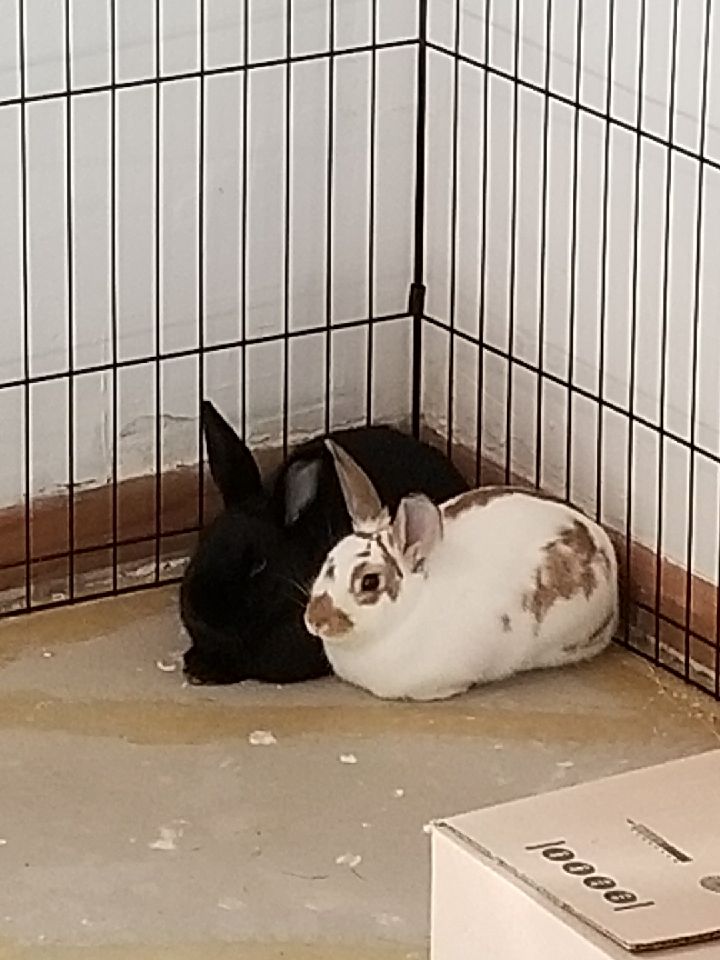
Look familiar? This was the picture the sanctuary that we got Oliver and Luna from sent us of their first bonding session with them. This is an example of a good sanctuary. They have a proper enclosed and you can see that Oliver has access to nice green hay a bit ago before the picture.

Help rabbits in need

When you look on a website like Petfinder, you will probably see a lot of rabbits with health problems. I recommend finding one sanctuary center that you can trust, and looking through all of the rabbits, find the one you would like to adopt, and take into consideration anything that may cause problems. When you meet up with the owner or employee, donate some money to a rabbit in need from their sanctuary, they will definitely appreciate it!

I know I mentioned a lot of bad things about pet stores this post. There are so many good things about pet stores, but sometimes they take it too far. Not everything can be believed and this shouldn’t keep you from buying products from pet stores. But please adopt, don’t shop.

If you want to know more about adoption and adoption purposes, give this post a like up. Please share this blog channel with your fellow rabbit lovers and have an amazing rest of you day. HAPPY THANKSGIVING!


The Effects Senior Rabbits Add To Daily Life

Last post, I talked about some things that may come up when owning a senior rabbit. I would like to touch base on that with more detail and information for you.

Nutrition

When rabbits are older, they need more advanced and strict nutrition. This comes from veggies and hay. Pellets may help, but aren’t nessecary. Veggies are a great boost to your rabbit’s nutrition and you can start feeding more veggies with permission from your vet. Veggies help with nutrition, vitamins, strength, and overall health and happiness. Hay is the main factor. Remember that senior rabbits are more vulnerable to illnesses than younger rabbits. Hay is what can easily prevent that, along with healthy veggies. Hay is what keeps your rabbit alive. Like horses, they graze and rely of grasses. Check out my past posts for more information of nutrition. (What to feed a rabbit, feeding amounts, choosing proper hay, etc.)

Little Ollie.jpeg

(Yes, Oliver was going through a shed)

Bedding

Last post, I know I talked a lot about bedding, but it will change drastically. Bedding plays a large role on your rabbit’s comfort, joints, and temper. When they get older, the main thing you will notice is that your rabbit will be less active, obviously, and may have a bad temper. Bedding can play a role in that. Rabbits could become a little tempered due to pain caused through sore hocks, arthritis, etc. Last but not least, comfort should definitely because considered. Comfort is wanted no matter what, so treat your rabbit with some nice fleece.

Illnesses

As mentioned before, senior rabbits are very prone to illnesses.  This is because their immune system weakens just like ours. This allows many illnesses to effect their health, and will be found to become sick way more often.

Expenses

The price for owning your little friend will go up. You will need to pay more for bedding, food, hay, new litterboxes so that they can get in better, etc. You may even need a new litter to allow them comfort. You will find yourself at the vet more often, and paying more serious amounts. This is what will happen to everyone’s senior rabbit and your budget. Even though this seems like a lot, you’re not spending crazy amounts. You pay more, but it’s not too much to handle.

Lifestyle

You may have to change your schedule to help out your rabbit and even you.. You may have to feed them later, or give them water more often, or even have a bonding session and encourage extra hay through that. Many people will add in another salad at night if they only feed one salad in the morning. This helps their immune system and nutritional balance so much but should always be supervised and monitored with your vet. You may find yourself giving more playtime too.

Caring for a senior rabbit

When is a rabbit considered a senior?

A rabbit is considered a senior at the age of 6. Many rabbit’s immune systems will weaken at this age, causing more illnesses.

Common things found in senior rabbits

Many things you will find from a senior rabbit include arthritis, sore hocks, obesity, underweight, and lack of exercise and speed. Arthritis is very often found when a rabbit had problems in the past with joints. Stick around throughout this week to learn more about it. I explained sore hocks last post, feel free to check it out. Obese and underweight rabbits tend to be seniors. This is because they will either become more lazy, or eat less. This can cause many health problems. This joins in with lack of exercise and speed. Just because they are older, doesn’t mean they get less playtime.

How to maintain a healthy diet

Of your rabbit is average weight: feed the same way you do right now. Make sure that you are giving the required nutrition and keep it up!

If your rabbit is overweight: start feeding less with the help of a vet and research. Make sure you limit treats to their daily veggies and use those as treats (added on to the daily amount). Make sure everything you feed has nutrition that benefits your rabbit’s health.

If your rabbit is underweight: start allowing more food with vet permission. Supply more hay and encourage your rabbit to graze more. Everything should be under your rabbit’s vet, so don’t do anything major without vet reference.

Joint care

If your rabbit has arthritis or is developing sore hocks, start using more cushion for your rabbit’s feet. Allow softer litter, bedding, and overall flooring for better results. You can check out my other post on bedding and sore hocks to help you out.

If you ever have to make major changes to your rabbit’s lifestyle, always consult with your vet. Thanks for sticking around! Feel free to do more research if necessary!

All About Sore Hocks

What Even Are Sore Hocks?

Sore hocks are when your rabbit has been building up a callus/blister on their hock. They can be anywhere from bright pink, to bleeding red. If your rabbit’s hock is bleeding, go to the vet immediately. Sore hocks are caused by so many things that can lead to infections.

What Causes Sore Hocks?

Sore hocks are caused by many things. Many of them include anything with hard flooring, not cleaning litter boxes enough, long nails, wire bars, and arthritis. Hard surface has the main effect on sore hocks. If you notice sore hocks, start supplying more cushioning to your rabbit. You can also use a remedy that I will explain later. Not cleaning litter boxes enough is a small component, but can cause sore hocks due to lack of sanitary. Long nails cause rabbits to lean back in their hocks, causing the inflammation. Wire bars cut open their feet and cause sore hocks. Last, arthritis can cause a rabbit to have a certain foot with worse hocks due to the pressure that may be put down on that foot.

Why You Should Never Use Wire Flooring:

Wire flooring is like an enemy to a rabbit’s hocks. They can do anything from causing blisters, bumps, and infections, to slices and sore hocks. Wire flooring is very often found in hutches, which can be used as an overnight area. If you want a hutch for the night, get one that is plastic bottomed, or make your own. If you don’t want a new hutch, give your rabbit tons of cushioning and use this remedy.

A Popular Remedy:

The popular remedy used from at home and even at vet is the chlorohexadine solution. When used at the vet, you will most likely notice that it’s in a fancy bottle, when you make it at home, it won’t be. What you need to do is mix 2 tbsp of chlorohexadine with 30 oz. of water. Then, soak a cotton fabric material in the solution, ring it out, and place it somewhere small that allows it to cover the whole area. Let your rabbit soak this into its hocks for 20 min. Repeat this daily if you would like.

Cotton Fabrics That You Can Use…

Pillow cases, cotton shirts, and any other cotton material that your rabbit won’t get their claws stuck in.

If you are wondering if your rabbit has sore hocks, I would recommend watching videos, looking at pictures, and taking notes of symptoms. There are many stages to sore hocks and what caused them. If you would like to know more, feel free to ask.

Rabbit Bedding

When people think of animal bedding, you may think of paper based bedding or any other pet store bedding. This is often found in unaware rabbit owners.

What Should I Use For Bedding?

Rabbit bedding consists of many things. A soft flooring, fleece or towels, and a soft spot. You can get soft flooring at many places. When I say soft flooring, I mean workout room connectable mats, yoga mats, memory foam mats, etc. This will often go under the fleece or towels that you could easily find at home stores or a fabric store.

What is a Soft Spot?

A soft spot is an area that you notice your rabbit tends to sleep on or likes staying around. Since your rabbit enjoys that spot, why not give them a nice soft area? Many Youtubers will make Etsy shops and make safe rabbit beds. When you’re in a pet store, don’t be fooled into buying a bed there. If there’s  loose material or grippy fabrics, it is not safe. Your rabbit’s claws might get stuck and at worst, they might even rip out a nail.

What About Paper Bedding?

Paper based bedding is for litter boxes. Older rabbits that may end up with a source of arthritis may need this. Paper bedding is soft on hocks for litter boxes, but if it is spread out across a cage, your rabbit will be confused on where to go to the bathroom. Paper bedding is good for on top of  wood pellets in a litter box.

How Expensive is it?

It can vary. Overall, rabbit bedding can be free. If your family has decent towels that they don’t use anymore, you can use those. Keep in mind that fabric softener and other scents aren’t safe for rabbits. If you buy fleece from a fabric store, It’s usually about eight dollars per yard. Its not hard to get proper bedding for rabbits. Many people stress over it, but it is a simple concept.

Tile?

Tile is okay for rabbits. It shouldn’t be the only thing they are exposed to, otherwise they may get sore hocks. It is good for cooling down a rabbit on a hot day, but not for their main flooring.

If you want to know more about bedding, feel free to like this post. I am still finding out more about the donation fundraiser. I will make an announcement once it’s up and running. Thanks for coming!

Proper Rabbit Grooming

Why should I care about grooming?

Avoiding grooming for your rabbit is the equivalence of not allowing someone to brush their hair for a week. It is also refraining yourself from having proper hygiene for your nails as well if someone didn’t allow you to clip your nails.

What is considered grooming?

Grooming for a rabbit includes brushing and clipping. Rabbits have about two major sheds and two small sheds a year. Grooming should take place about every week to twice a day if necessary during sheds. Clipping nails are the next most important thing in rabbit hygiene health. Long nails can cause many things such as sore hocks.

Causes to the lack of grooming

If you refrain from grooming your rabbit’s hair or avoid clipping its nails, your in trouble. Before you know it, your rabbit could generate GI stasis due to clogging intestines with hair and fur which would be ingested by drinking from hair filled bowls, grooming themselves, or even other bunnies. This is a major indicator that you have to make a change. Now if your rabbit’s bowels are strung together with hair, don’t worry, this is completely normal during a major shed.

What if I refrain from clipping their nails?

If you avoid clipping your rabbits nails, you need to take action. Do NOT take this wrong but if you pick up your rabbit to clip their nails and they constantly squirm, you aren’t going for the way you should be. Simply pick them up, set them on a towel on a bench or table and clip their nails. Refraining from clipping nails can lead to sore hocks since they are leaning on their hocks for support, long quicks due to waiting too long, and other possibilities.

Supplies

For grooming your rabbit you will need a brush. You can buy a brush made for rabbits, or you can DIY your own.

20181112_153533

This us about example of a dog flee comb. Simply weave a rubber band back and forth to grip the hair. It works just as well as an expensive brush for way less.

When it comes to nail clippers you could get dedicated rabbit nail clippers, or you could just get cat nail clippers. You need to avoid dog nail clippers. If you use dog nail clippers, it could chip the nail and cause major bleeding.

20181112_153624.jpg

This is an example of a pair of cat nail clippers. One dollar clippers work just as well.

How to properly groom your rabbit.

When grooming your rabbit, you should not go against their fur. You should always go with the fur in a swooping motion. Focus on the spots where your rabbit sheds most. Start at the top of their back and swoop down to their bottom. Once at their tail, make an upward swooping motion to pull out the hair. Go slower or faster if needed. Sometimes grooming takes 15 minutes, other times an hour.

How to properly clip your rabbits nails.

To clip your rabbits nails, find their most comfortable position, take their paw, and simply clip tiny segments of their nail off. If you can’t see their quick (the vessel), I would recommend either shining a light on it to see the quick, or lightly press in the nail with the clippers twice and then cut through. If your rabbit flinches, you would have clipped their quick. Some rabbits overall don’t like their nails being clipped, so if nessecary, take them to the vet to have them clipped. I find the best way to clip Oliver’s nails is to either pick him up and have my sister clip them, or have him flop and clip them then.

Keep in mind…

Rabbits have 5 claws on their front paws, and 4 on the back. The 5th claw on the front paw is a dew claw. If you find it hard to find them, don’t feel bad to pull back their fur on their paws to get to their claws. Always think of each others safety. If you every cut the quick, clot it with flour or corn starch. If it doesn’t want to stop bleeding, take your rabbit to the vet. When dealing with fur getting in the way of the nails, you could always gently clip hair away from nails if necessary.