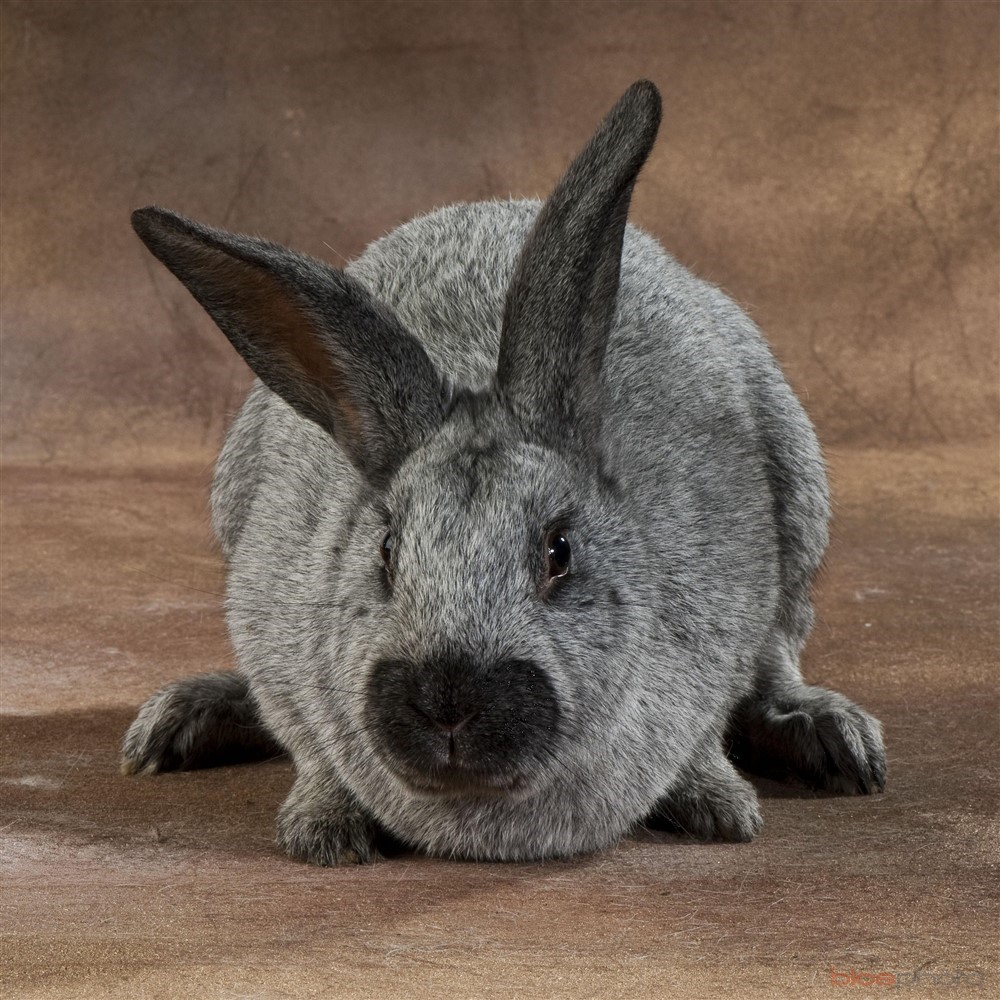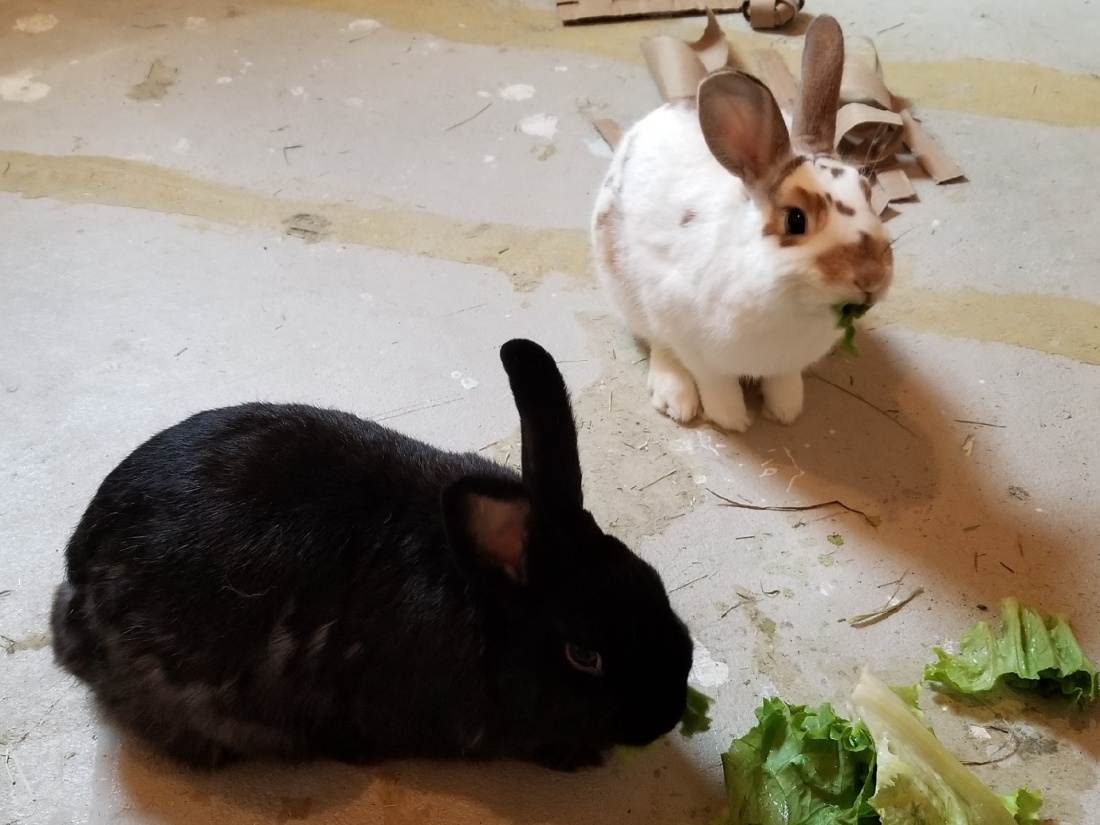
DIY Toys and Treats From Forage

Since forage can be used in many ways, showing what they can be used for is important. Because of that, I will be going over different toys and treats that are very easy to make from easy-to-access forage.

Willow Sticks:

There are two different ways to give willow sticks. They can be given one by one or in bundles. Here are the different materials needed to make the bundles, since all you need for the willow sticks when they’re separate are the sticks themselves:

  1. Willow sticks (pesticide, bug, and gas free and sanitized)
  2. Rabbit safe string (twine, sisal, etc.)

To know how to sanitize sticks, check out my post on how to make sticks safe for rabbits: Making Tree Branch Sticks Safe For Rabbits

To make these bundles, all you need is a handful of willow sticks and two strings of rabbit safe yarn to tie around each end of the bundle
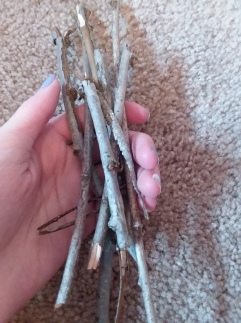
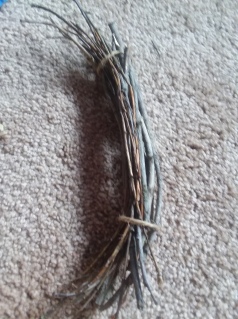
20190331_150845 20190703_172255

Singular                                              Bundle

Willow Treats:

Willow treats are really just the leaves of willow trees that are dried and given to rabbits as a healthy treat, but they can also be incorporated into baked treats. For the baked treats, you will need:

  • 1/2 cup of pellets
  • 5 baby carrots (smashed)
  • 1 banana
  • 20 ripped willow leaves (ripped into pieces)
  • 1 baking sheet

To start this off, you will need to preheat an oven to 350 degrees Fahrenheit, and allow this to preheat while you prepare the “batter”.

To make this treat, you will have to start with crushing the 1/2 cup of pellets and placing them in a bowl. Then, grind up the carrots in a food processor and smash the banana. These two ingredients can be placed in a small bowl. The willow leaves can then be torn up into pieces and added to the crushed pellets. From there, the dry ingredients can be added to the carrots and bananas.

From here, take a small ball of the mixture and slightly press down on it to allow the mixture to slightly spread. Once all of the treats are formed, bake the treats in the oven for half an hour. Allow to cool for ten minutes once baked, and feel free to give them to guinea pigs, rabbits, and small pieces to hamsters and gerbils.
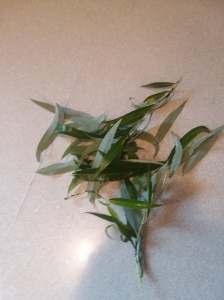

20190705_112605

53524e55b732b38cc7701a2d431ba6af--pet-bunny-rabbits-treats-for-rabbits Link to Picture

Grass Twists:

Grass twists are extremely easy and straight forward. All you will need is some long grass and rabbit safe yarn.

To make the twists, all you need to do is bunch up the grass into three sections and tie them together at the top with the yarn. From there, braid the three sections and tie off at the end.

This is a great entertainment toy for rabbits that struggle with eating hay or are being switched over to foraged grass for hay. The fiber is great for the rabbit, and the entertainment is amazing for rabbits that go crazy over chewing.
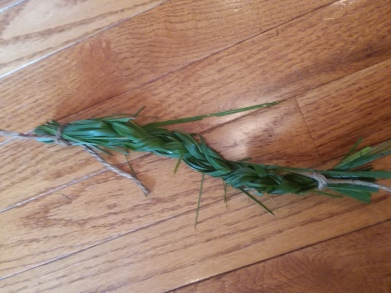
20190705_113637

Forage Mix Hay Topper/Treat:

This hay topper is completely on your preference for your rabbit, an is great to entice a rabbit to eat hay.

You will need:

  • Forage of your choice (I’m using dandelion flowers, willow leaves, clover, and apple stick bark pieces)
  • Scissors
  • Container (For storage)

The process of making this topper is extremely easy. All you need to do is to gather the items to be used in the mix, and them cut them to the preferred size and mix together and store.

This can be used as a hay topper or a hand fed treat, either way, I’m sure the rewarded animal will appreciate the little gift.
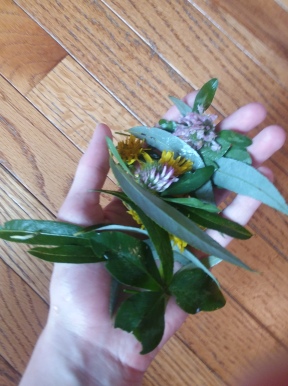
20190705_112506


Thank you for all of the support that has been given throughout this journey. Two days ago, I hit my new record of viewers in a day, then amount being 1 view short of being two times more views than my old record, which I find amazing. To keep this up, share this post with family and rabbit lovers, and I will talk to you in two days, bye!
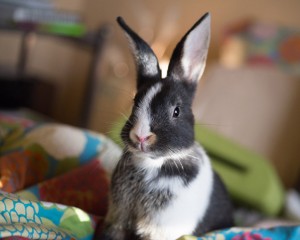
The Britannica Petite Rabbit Breed

The Britannica Petite rabbit is a unique rabbit in many ways. Through its size, characteristics, history, and more, these rabbits are great, so make sure to check out what they are all about, right here, right now!

History of the Britannica Petite Rabbit:

The Britannica Petite came about in the early 1800’s from the Polish rabbit, known in England. This was around a time when showing rabbits was becoming popular. It wasn’t until the 1900’s that the Polish rabbit was transported to America. The Polish rabbits were considered “dubbed Polish”.

Meanwhile, rabbit owners in England were working on proper stances for the Polish rabbits for the shows that were starting to become popular. The rabbits became so accustomed to standing tall that when these rabbits were bred, they ended up with baby bunnies with amazingly refined bone structure.

The British Council still considers the Britannica Petite rabbit a Polish rabbit, but the American Rabbit Breeder’s Association already recognized a different rabbit breed to be considered a Polish.

Common Characteristics:

The Britannica Petite has a quarter circle arch in its back, if viewed from a side perspective. The rabbit has a wedge-shaped head and small ears as well. The ears also stick straight up.

There are many colors for this breed, but here are the majority of them, if not all of them: Red-eyed-white, blue-eyed-white, broken (white with spots of other colors), black, chestnut aguoti, black otter, and sable.

Common Personalities:

This breed of rabbit is very popularly known as a very energetic and curious rabbit. Even though this rabbit is very energetic, it also has a very sweet side. They love spending time with their owners, or other rabbits, and are very affectionate.

Sizing/Weight:

Since this rabbit is so incredibly tiny, this rabbit is a dwarf. Even though it may not look like it in the picture, this rabbit is definitely a dwarf, and the sizing will make even more sense after you know how tiny it is weight-wise.

This rabbit is definitely a dwarf on weight standards. This rabbit averages anywhere from 2 to 2 1/2 lbs. That is such a tiny rabbit, and that weight is for full grown Britannica Petites.

Common Medical Problems:

This rabbit breed isn’t known for any illnesses commonly found in only it’s family, but making sure that at home check-ups are happening can be very important.

Extra Care:

Even though this rabbit has soft, short, but silky fur, they tend to shed more than just the twice-a-year large sheds, which does mean that keeping up on grooming is extremely important.

Since this rabbit is so energetic and curious, making sure that they get time out of their pen every day is important. Allowing any rabbit to have time to explore is important, but for an extremely adventurous rabbit like this, it really is beneficial. This rabbit needs the space of a medium sized rabbit at least, all because of its energy.

Works Cited:

“Britannia Petite Rabbit Breed Information and Pictures.” PetGuide, 20 Oct. 2017,                        www.petguide.com/breeds/rabbit/britannia-petite-rabbit/


Sources:

Link to Thumbnail Picture


Thank you so much for coming back for today’s post. Please share this with your family and friends to show off how amazingly cute rabbits can be, and really show how amazing they are as animals. Come back every other day for a new post, but until then, share proper rabbit care, and I’ll talk to you soon, bye!

Making Tree Branch Sticks Safe For Rabbits

Of all of the forage out there, I would like to go on one little topic, twigs. Twigs are amazing chew toys for rabbits, guinea pigs, hamsters, etc; but how do you prepare them to ensure that they really are safe? To answer that question, I will be going over 3 ways on how to ensure that those twigs you want to give your rabbit are safe.

Option 1: Vinegar:

This, in my opinion, is the easiest option out there to sanitize your rabbit’s twigs, but nobody seems to know it. When you think about it, 50/50 is water and vinegar, and is a disinfectant, and cleaner, so getting rid of the water just makes it stronger. The same goes with twigs, the bacteria will be killed, along with any bugs or other organisms.

The steps to this process are so easy. First, you go out and collect your twigs from a tree that is free of pesticides and isn’t dead. Next, bring the twigs in, spray them with white vinegar, and allow them to air dry, or wipe them off.

This option is great for summer when you really don’t want to turn on the oven and make the house any more hot than it already is, or you’re just too lazy to do a little extra work. I would recommend wiping off the vinegar when using this option, especially if these twigs are going to a picky bunny, they might not like the vinegar taste.

Option 2: Baking:

The next and most beneficial option would be baking the twigs for long enough to kill the bacteria and bugs in the heat of an oven. This is a great option to ensure that all of the bacteria is dead, but some people are more on the conservative side for energy, and I respect that. If you conserve energy, this may not be the best option for you.

To kill bacteria through baking, you will need your sticks from a pesticide free tree that isn’t dead, and a baking sheet to place the twigs on. First, preheat your oven to 250 degrees Fahrenheit, or 120 degree Celsius. From there, place the baking sheet with the twigs in the oven and allow them to bake for 30 minutes. This will leave the twigs bacteria free, and crispy as well.

The reason I say that this is the most beneficial way to kill bacteria on twigs, is because of the heat. Heat is probably the best way to kill off bacteria, and this method does just that, and it gets the job done without much effort.

Option 3: Washing:

The last option I will be reviewing today will be washing the twigs. This is an option for everyone, and is great for younger rabbit owners. By washing the twigs, you will be killing any bugs from the water, and also killing bacteria through scrubbing harshly.

To wash your twigs, you will want to have your twigs already, and a sponge of some sort. For this process, all you have to do is take the sponge and scrub vigorously at the stick with hot water running over it. The hot water can kill bacteria as well. Allow the sticks to air dry, if not, dry them of with a towel.

Do NOT use soap because soap should never be ingested by any organism. By washing the sticks with soap, you are putting your rabbit at a large risk of sickness and death through poisoning. I’m sorry if I broke it to you, but soap isn’t food for us, so it isn’t food for your pets either.

Why is This Step Important?

The step of disinfecting the sticks is so incredibly important for your rabbit’s health. Giving a rabbit a stick to chew and eat that just so happens to have bugs and bacteria nesting on it just sounds bad, and it really is terrible.

Your rabbit could end up with countless diseases, mites, worms, or possibly flystrike if there are flies coming in with the sticks. Flystrike would be an extremely rare scenario if you are properly grooming your rabbit, but it could happen at any time.

This really goes to show that every little detail does count and could save plenty of money, time, and sorrow. I realize that the scenarios I put out are quite serious, but some of them could easily become an issue without this step, so please, disinfect your rabbit’s sticks and twigs.


Works Cited:

Bam, et al. “How to Prepare Sticks/Twigs?” How to Prepare Sticks/Twigs? –                                       BinkyBunny.com – House Rabbit Information Forum – BinkyBunny.com –                                 BINKYBUNNY FORUMS – DIET & CARE, 2006,                                                                                   www.binkybunny.com/FORUM/tabid/54/aft/128536/Default.aspx.

Suzuki, David. “Does Vinegar Kill Germs?” David Suzuki Foundation, 2019,                                      davidsuzuki.org/queen-of-green/does-vinegar-kill-germs/


Thank you for coming back again for this post. I appreciate every single one of you, and would really appreciate it if you would leave a like to start July strong. By leaving a like, I will know if you would like me to do a 4th of July post, but only if that thumbs up is there! Please continue to come back every other day, and I will talk to you soon, bye!

The Blanc de Hotot Rabbit Breed

There are so many rabbit breeds, so going over yet another one is a great opportunity for anyone looking for the right breed for them. Because of that, I will be going over the Blanc de Hotot rabbit breed for anyone looking for the right breed for them.

The History of the Blanc de Hotot Rabbit:

The credit of the establishment of this breed actually goes to one individual, this person being Eugenie Bernhard, the 2nd woman to establish a rabbit breed. This breed happened to develop in Hotot-de-Auge, Normandy. This breed was known for its meat and fur, being important in 1902, when this breed was first recognized.

To obtain this breed, a Papillon and White Vienna were bred, then after that, a White Flemish Giant. This breed-to-be-developed was worked on for 20 years. It took over 500 breed crossings until the breed was to the standards, the year being 1920 that this breed was shown in the Exposition international d’Aviculture, which was located in Paris.

It wasn’t until October of 1922 that the French recognized this breed, and finally were shipped to the USA around this time, but there is a twist. They didn’t last long in the US, and were shipped to Switzerland. Almost all of the Blanc de Hotot rabbits died that existed in Europe due to World War II. It wasn’t until 1978, that a man from Texas recognized the problem and put this breed on the endangered list. The breed was official in 1979, but was known globally to be endangered.

Common Characteristics of the Blanc de Hotot:

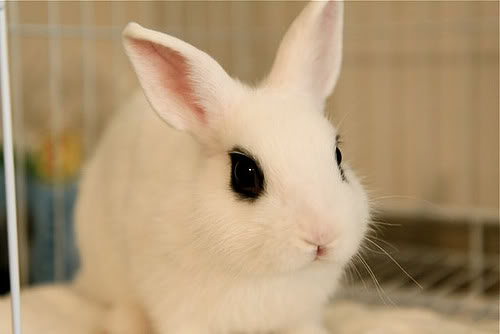
The Blanc de Hotot rabbit has short and fluffy fur. This rabbit is known as the cute and fluffy bunny that is all white besides the black “eyeliner” that is accentuated from its bright fur. There is actually a standard saying that the “eyeliner” can’t be more an eighth of an inch thick, otherwise the rabbit isn’t proper, but hey, they’re still cute.

The rabbit’s ears are medium sized with the tail being extremely small, only because the fur covers the majority of the tail. Even though this rabbit looks very small in pictures, you would be shocked at their sizing, which I will be going over in a bit.

Common Personalities of the Blanc de Hotot:

This rabbit is extremely well known to be an amazingly sweet and docile rabbit. Not to forget, this rabbit is also extremely active, which is great since a voluntarily active rabbit is great for beginning rabbit owners, especially for those confused of how to get the rabbit’s exercise in without too much time being spent.

Sizing and Weight:

This rabbit, believe it or not, is a large sized rabbit, this is insane to me. In all of the pictures that could possibly be found, this rabbit breed always looks so tiny, but they really aren’t.

Blanc de Hotot rabbits weigh an average of 8 to 11 lbs. as a healthy weight. This being said, making sure this weight is being kept is important, like in all animals.

Common Medical Problems:

This rabbit doesn’t have a common illness, but through my research, I have found that they, like all other rabbits, are susceptible to overgrown teeth. Overgrown teeth can be shown by lack of athleticism/activity and eating problems. If you think your rabbit have overgrown teeth, go to your vet immediately to have a treatment of shaving the teeth down and a prescription if needed.

Extra Care:

This breed doesn’t have any extra care needed.

Sources:

Link to Thumbnail Picture

https://www.petguide.com/breeds/rabbit/blanc-de-hotot-rabbit/


Why is Forage Important?

Foraging is important to many rabbit owners and their little friends, but not all rabbit lovers, or any person out there, will know why foraging really is important. Due to this, I will be going over all of the ways that forage is important for you, and your rabbit(s).

How Can Foraging Benefit Your Rabbit?

Foraging can benefit your rabbit in 4 different ways, these ways being entertainment, nutrition, enrichment, and variety.

Entertainment:

Forage is an amazing source of entertainment for rabbits, they love it. Entertaining rabbits can’t always be an easy task, but grasses can really keep your rabbit occupied for a long time. Simple things found outside can give your rabbit something to gnaw on to keep them distracted for a while.

Nutrition:

There are many sources of food for your rabbit outside that isn’t accessible from inside. That being said, getting that food for your rabbit is amazing for their well being. There are so many amazing plants outside that have so much more nutrition than anyone could expect, dandelions are a great example. They have great nutrition in their leaves for salad, and their flowers have natural sugars that are still healthy in a form of a treat, or a salad add-on.

Enrichment:

As for enrichment, what part of forage isn’t enrichment? Your rabbit is now given the access to different treats, foods, and toys that they were kept away from for their entire life, and now they get the opportunity to experience this all. Enrichment is all about occupation and experiment, forage covers both.

Variety:

Forage is so amazing for giving a rabbit a little variety in its life. Some rabbits will only get store bought toys and the food that they need, but giving them more than just what they need can really improve the rabbit’s appetite and mood. Variety is found everywhere in forage with food, treats, and toys. Can’t forget that it’s all natural too!

How Can Foraging Benefit You?

Believe it or not, foraging can benefit you in many ways, even if you can’t realize it. Some of the ways that foraging could and would benefit you includes budget, piece of mind, and nutrition.

Budget:

Whether you only forage for one item, or for everything in your rabbit’s diet, the amount of money spent on your rabbit’s needs will decrease by a very slight amount, or a very large amount, or you may never have to go to the pet store again, you may never know.

Piece of Mind:

There is that piece of mind when you forage, it’s because you know what’s going into your body, or your rabbit’s body. You know whether it’s safe, unsafe, or wild, everything you put there, you know it’s in there… well, hopefully.

Nutrition:

The nutrition is a great variable in this all if you happen to forage for yourself. Nutrition is a very large factor in many decisions with food, whether it’s for your rabbit, or yourself, it should always be incorporated within the subject. Lucky you, forage can be extremely nutritious and can give many vitamins and minerals that may not have been all that accessible before.

Thank you for coming back again for this post. It does tie in with my last foraging post I did, so make sure to check that out. As I have been, I will be going over breeds one day, then foraging/outdoor activities the next, considering that I post every other day. If you enjoyed this post, give a thumbs up and make sure to tune in 2 days from now for my next post.

The Beveren Breed Rabbit

Today, I will be going over the Beveren breed rabbit. As I have been doing, I will be going over the common characteristics, common personalities, common medical problems, and more!

The History of the Beveren Breed Rabbit:

There is a debate of whether this breed was from England or Belgium. Those on the side of Belgium say that the rabbit was transported around the late 1890’s to Britain, but then put in the spotlight for shows around 1905.

The breed was then most popular for the time in 1918, when the Beveren Club was established. In 1919, the breed was transported to America and accepted into the American Rabbit Breeders Association as an official breed.

Characteristics of the Beveren Breed:

The Beveren breed rabbit has a medium sized torso with a nice, rounded face. The ears are very large in the aspect of length, and reach up to 5 inches long at the age of adulthood. This rabbit has a large body overall.

Beveren rabbits have very sleek and glossy fur. There are three different colors that are accepted through the ARBA. These colors are:

  • Solid Blue
  • Solid Black
  • Blue-Eyed White

There are many more colors of this breed, but the three about are the official and accepted colors for this rabbit.

Common Personalities of the Beveren Breed:

These rabbits are known to be quite intelligent, so very carefully planning locations, and bunny-proofing will be extremely important. These rabbits are also very curious and are docile. They do better with older children than younger children for any families, but will still do great with adults.

Size and Weight:

The Beveren breed rabbit is large-sized because of weight and overall size. The rabbit itself is quite large compared to many rabbit breeds. The different size options are dwarf, small, medium, large, and giant, so it on the bigger side of rabbit breeds.

The average, healthy weight of a Beveren breed rabbit is anywhere from 8 to 12 lbs. This really goes to show that they are very large, and can weigh quite a lot for their body size.

Common Medical Problems:

Since this is a larger rabbit, it is so important to make sure that proper grooming around its bottom is done. This way, any possible buildup of fur won’t clump up to allow droppings to stick, to then cause flystrike. I find that it’s much easier for smaller rabbits to groom their bottom, so giving this rabbit the grooming and attention-to-detail is very important.

Extra Care:

This breed specifically doesn’t have any extra care, but as a large rabbit, like all of the other large breeds, I would be very cautious over weight gain and loss. The correct diet, encloser, interaction, and exercise can allow this rabbit to live for much longer than expected.

Sources:

Link to Thumbnail Image

https://www.petguide.com/breeds/rabbit/beveren-rabbit/


Thank you for coming back once again for this post. I will be going over more and more information every other day, so continue to come back then. Until then, please feel free to visit my last post and the others suggested within that information. I’m so glad to have you and will talk to you soon, bye!

What’s the Whole Point of Foraging?

Why do people even forage for their rabbits? Is there any point? I will be going over all of the details of why people forage and why, so feel free to stick around to read.

Is There A Point to Foraging?

There are so many points to foraging that aren’t recognized. Foraging does have a point and can really help you and your rabbit out in many ways.

The whole point of foraging is to have an easy access to your rabbit’s food nearby, and for you, your own provider, to know what is in it. Obviously, you know whether there would be any pesticides if it’s on your land. This is why I feel it’s nice to forage, but some people could have a different opinion.

For anyone who lives in the country or in a more private area, foraging will be amazing for you, but what about someone who lives in a city? Sadly, when you live in a city, you won’t be able to forage anywhere nearby. To forage, you will want to consider the following:

  1. Going to a relatives house to forage where they have pesticide, gas, and bug free areas, this is very often found near farmlands or grasslands.
  2. Having a family member or friend forage from an area that is safe around them, that way you don’t have to do it, and your still getting the forage you would like.
  3. Grow a forage area near you. Whether this is in your house, or not, grow a mini garden of grass, herbs, and common wild plants that are safe for your rabbit.

Make sure that before you go for any forage option, whether you do one of the three above, or go foraging on your land, you MUST know what your rabbit can and can’t have for forage. There are so many reasons including your rabbit’s health, safety, and your rabbit’s life, along with yours. There are plants that can kill a human, just by brushing past it, so please, go through my posts and take note, or just print the posts off. Here are the posts I recommend you look through before foraging:

Why Do Rabbit Owners Forage For Their Rabbits?

Rabbits are needy animals, we can easily admit it, so making it easier on ourselves to take care of them is always nice. Most rabbit owners forage for their rabbits as a treat, but others may do it for a healthier option or even more! Below are ways that foraging can really benefit you, that you may not of thought of.

The Ways Forage Can Benefit You and Your Rabbit:

  1. It’s much healthier than store-bought food. Store-bought food can have many chemicals in them, causing uncertainty in many rabbit owners. The best option then would be going for all organic food, but there are many problems with this as well. Many people don’t have access to organic food, some stores don’t carry it consistently, but for some, they can’t financially afford it from a sudden situation. This is my reasoning behind it, along with my belief.
  2. You know what’s going into the rabbit’s body. Some packaging, which is also bad for the environment, isn’t very realistic. Many packages will say all of these great things, but they can also hide many substances as well. On the front of a package, you’re not going to find “sprayed with a lot of chemicals” on the front, it’s not realistic, because all the company wants is a sale. With forage, you don’t have to worry, you know what’s going into it.
  3. It saves so much money! If you were to switch your rabbit’s diet entirely onto forage, you could save up to $1,000 dollars or more on food, toys, and treats. Assuming you get veggies every week, and that they cost around $10 to $20, for 52 weeks, that’s anywhere from $520 to $1,040 just on veggies! On hay, you would have to base it on your provider, and for treats and toys, you really could save around $30 or more dollars if you switched entirely. Remember, this is in one year!

With What I Said…

To entirely switch, you would need a lot of grasses that are safe for rabbit, a large variety of wild veggies, or a garden, which could also save you tremendous amount of money, and you would also need the time to go out, forage, and prep it to be safe for your rabbit(s). You would also have to slowly switch due to sensitive stomachs, which all rabbits have.  Foraging is an amazing thing, and one day, I hope to rely on foraging instead of a store.

I get that many people won’t entirely switch, but foraging for many aspects of your rabbit’s daily needs can really give a piece of mind. I would at least encourage you to try it once, if you don’t like it, you don’t have to continue, it’s an option.

Access to Thumbnail Picture: Link (All  credit goes to Alamy stock photos)

Thank you for coming again for this post. I encourage you to go back to those posts I suggested and take some notes, or print them off as I had said before. I really wanted to make sure that people really knew the benefits and the great/bad in foraging. It really is a nice thing for rabbit owners, and I would encourage foraging for other animals, maybe even yourself!

The Belgian Hare Breed Rabbit

Today, to go over a single breed rabbit. (there aren’t multiple related like the Argente rabbits) I would like to go over the Belgian Hare. As always, I will be going over the history, common characteristics, common medical problems, and more.

The History Behind the Belgian Hare Rabbit:

The Belgian Hare originated from Belgium, not very surprising, and they blew up to be awesome rabbits to breed. They were mainly known to be meat rabbits due to their “hearty meat”. It was already 1873 by the time that this breed was transported to England.

The breed was then transported to America in 1877, and was accepted into the National Belgian Hare Club, which was formed in 1897. The breed’s name was constantly being changed, but in 1972, the Belgian Hare breeders came together as a group and discussed. Not long after that, the breed was called the Belgian Hare.

Common Characteristics:

The Belgian Hare will usually have brownish-grey fur, a very curved back, and a thin looking structure. They are quite sturdy rabbits, despite their small stature. The rabbit’s coat is also very thin and doesn’t need any maintenance besides occasional run throughs.

Common Personalities:

This breed is very known to be sweet, but can be extremely protective from being known for being nervous. These rabbits are very active as well, so making sure that you are taking time to bond with this rabbit is very important, since it is quite skittish.

Size/Weight:

Belgian Hares are large sized rabbits and can really show it. They are very tall rabbits with long legs as well. Their backs arch tremendous amounts and are quite skinny, even though they can weigh quite a bit.

Belgian Hares will average a healthy 6 to 9 pounds of weight. Considering their tall stature, that isn’t much. If they were stockier, they would be a heady breed of rabbit.

Common Medical Problems:

The site says that this rabbit is susceptible to flystrike and mites from being outdoors since they are known to be “outdoor rabbits”, but no rabbit should ever be kept outdoors. Make sure that this rabbit is always kept indoors for general housing, like any other rabbit, especially since rabbits get spooked so easily, this breed in particular.

This rabbit has very short fur and should be monitored for any sort of skin irritations. The skin is very exposed compared to most rabbits, and for this breed in particular, I feel that it could show many signs needed to possibly save its life someday.

Even though that came from my mind and not from research, honestly, it’s common sense. This rabbit could also be more sensitive to cold, and that could also dry out its skin. I feel that your rabbit’s skin is like yours, it’s dry if hydration isn’t proper, remember that.

Extra Care:

The rabbit does have a little bit of extra care that I would like to recommend for anyone with this rabbit, or getting this rabbit. I would recommend bonding sessions with just you and the rabbit at least once a day. Since this rabbit is so skittish, you will want to build the trust in order to do more with your rabbit and give it a happy and very healthy life.

Sources:

Thumbnail Picture Link

https://www.petguide.com/breeds/rabbit/belgian-hare/


Thank you for the continuous support that has been given. I will be posting like I have been, so come back in 2 days for a new post. In the mean time, share proper rabbit care and I will talk to you soon, bye!

What I Like to Forage and Safety Tips/Details

To start a new little chapter into the foraging unit, I would like to go over the forage I get for my rabbits. I will be going over what I commonly forage, some details, and the rabbits’ favorites.

What I Like to Forage:

  • Grasses
  • Clover
  • Dandelion greens and flowers
  • Willow sticks/leaves
  • Apple sticks

A Few Details With This Forage:

Like all forage, it must be free of the following:

  1. Bugs
  2. Pesticides
  3. Gasoline
  4. Viruses

So in other words, make sure that there aren’t any bugs living in the forage, don’t give any forage to your rabbit(s) that could have or was sprayed and/or treated with pesticides, don’t give your rabbit forage in contact with or near contact with gasoline, and don’t give your rabbit any forage from a plant that could have died from a virus.

Bugs:

Bugs must be removed and really shouldn’t be in contact with the forage. Bugs can spread throughout the rabbit’s area and cause the following problems:

  • Invasion of food
  • Mites, ticks, fleas, and flies living on your rabbit
  • Flystrike
  • And many more scenarios

Pesticides:

Pesticides are poisonous to all animals if they are ingested, trust me, eating grass from your lawn with pesticides on it will make you sick, I tested it a long time ago. Here are some examples of forage that would most likely be sprayed with pesticides:

  • Trees (for the sticks)
  • Your lawn (for pretty much everything else on the list
  • Sometimes gardens
  • Your entire property (most likely)

Gasoline:

Gasoline is so majorly dangerous and should always be avoided for foraging purposes. Here are some ways that gasoline could be affecting the forage you may go for:

  • Lawns from lawnmowers
  • Around roads from cars
  • Around your house and property from weed wackers
  • Any way that gasoline is possibly touching the forage, it isn’t safe

Viruses:

Viruses are very commonly a problem with trees if they start to die from a virus and you want to collect so sticks, do NOT collect from that tree. Any dead tree from a virus can cause your rabbit to get stick, and there are probably bugs in there too if it’s dead, so just leave dead trees.

My Rabbits’ Favorites For Forage:

  1. Dandelion flowers, they like the greens more for salads
  2. Clover as a treat
  3. Apple and willow sticks for chew toys
  4. Willow leaves as low sugar treats
  5. Grasses for a hay topper


Thank you so much for all of the support and love that has been given to this post, my entire channel, and the community of rabbit owners and rabbit lovers. If you would, please check out my post on unsafe forage with their characteristics and details from four days ago. I say this because anyone who will be foraging, one interpretation could kill your rabbit, and I don’t want that to happen. There is so much information in that post that I will warn you to spare about 10 minutes to read through it, and an extra 5 minutes to interpret it all. Anyway, I will talk to you in two days for a new breed post, bye!

The Argente de Champagne Rabbit

To end with the “Argente” breeds, I will be going over the Argente de Champagne rabbit. As always, I will be going over common characteristics, personalities, medical problems, extra care, and more!

The History of the Argente de Champagne Rabbit:

The Argente de Champagne rabbit originated from Champagne, France. The thing is, the breed could have already been developed, but was recognized in Champagne, France. In France, they were known as the French Silvers.

Large quantities were then shipped to England, and were named the Argente de Champagne breed rabbit. But, even before this happened, America was sent many of these rabbits in 1912, the shipping to England wasn’t until 1920.

The breed then was accepted into the hands of the American Rabbit Breeder’s Association from anywhere between 1955 and 1959. Except, there was a twist. The Americans decided that the “e” in the end of Argente should be removed, which leaves many confused whether the breed is Champagne d’Argent or Argente de Champagne, it depends where your source is located. From where I am, I should technically be calling it the Champagne d’Argent, but I don’t see much of a worry since with either name, the breed is still the same.

Common Characteristics:

  • 0-6 months old:
    • Undeveloped coat of fur
    • All black
  • 6-8 months old
    • Coat developed
      • Silver
      • Thick and well maintained coat
      • Darker ears and nose (black)

Common Personalities:

Champagnes are known to be extremely affectionate, energetic, and quite curious. Due to this rabbit being extremely sweet and compassionate, they do great with first time owners. They are very loving on anyone and love to play.

Size:

Weight: The average Champagne is about 9-12 pounds. Considering the breed is so energetic, keeping the rabbit very fit and healthy shouldn’t be hard, as long as the rabbit has proper nutrition and is given all rabbit-proofed and rabbit-safe products.

Sizing: The Champagne is a large breed rabbit, which can be guessed by the weight. As such a large standing rabbit, making sure the cage is big enough is important, but if you can, I would suggest free roaming a rabbit of this breed, or any rabbit. The rabbit could really love the space and exercise capabilities.

Common Medical Problems:

Without proper care, this rabbit could very easily die from fly strike. Fly strike is a sickness commonly caused in rabbits with thick fur. When droppings attach to the fur, it will attract different flies and will cause the fly to lay eggs in the rabbits fur since it is so thick. The flies’ eggs will then hatch to be maggots, the maggots then going and eating the flesh of the rabbit with the potential to kill the rabbit within 24 hours.

Besides the fly strike, these rabbits should have at-home check-ups every week like any other rabbit to check for mites, infections, or any unusual behaviors.

Extra Care:

Just as a little side note for this breed, they are extremely social, so make sure to give plenty of extra attention to allow the rabbit to be a very respectful and loyal rabbit once it is full-grown. This should be the way with any rabbit, but I would like to mention it in this post since this rabbit can be so curious, which can turn to cautious very easily.


Sources:

Link to Thumbnail Picture

https://www.petguide.com/breeds/rabbit/champagne-dargent-rabbit/

https://rabbitwelfare.co.uk/rabbit-health/flystrike/


Thank you for once again coming back for this post. I would like to mention how amazing everyone has been and all of the positive feedback I have been getting. Please share this post with your family and friends and I will talk to you in two days, bye!