Favored Cleaning Solutions

The Different Solutions

50/50 is a mix of water and vinegar. It is most likely the most popular of all cleaning solutions that are safe for rabbits. You will need: white distilled vinegar, water, and a spray bottle. Simply mix half water half vinegar in a spray bottle, shake, and then it’s ready to use. 50/50 is great for litter boxes, cages, etc.

Different Ways to Clean Litterboxes

You could always just use 50/50 for cleaning litterboxes, but you could always do something else such as spreading out baking soda in the litterbox and pouring vinegar overtop of the baking soda, or you can always just use a hose to spray off excess litter clumps.

Steps with Pictures to Cleaning Litterboxes

1) When you have a soiled litterbox, the first thing you should do is either dump it outside in a compost pile, or dispose of it in a plastic grocery bag. If you would like to hose it down and be done that’s fine too.

2) Either use 50/50 and spray down the box, or spread baking soda through out the box and pour in the vinegar. Leave the box(es) to sit for 10 minutes.

3) Wipe down the litterboxes with paper towels and dispose of them. If you would like to pour out excess solution or vinegar, dump it in with the paper towels because they will absorb the liquids.

4) Wipe down the bottom of the litterbox with the solution if needed, wipe down the entire litterbox again if necessary. Then add your litter (check out my previous post, it includes information on proper sized litterboxes, proper litter, and what to avoid).

Before…


After…


Grey litterbox was cleanee with baking soda and vinegar, and the blue litterbox was cleaned with 50/50.

Thank you so much for coming along with me on my journey. As I had mentioned before, I would like to put up a donation option on my blog and am looking for supporters. Please like this post if you would participate in this surprise for a great shelter near me that doesn’t make profit from the government! This is going to be a Christmas present for them and would like to see them with smiles on their faces!
All About Litterboxes

Do Rabbits Use Litterboxes?

Yes! If you properly train your rabbit, litterboxes will be your life saver. In fact, many rabbits who use litter boxes tend to be healthier, here’s why. When rabbits are given straw as “litter” through their cage, they are literally sitting on their own droppings, and their urine. It you were that bunny, you would not want that. The straw tactic causes discolored bellies and feet. If your rabbit was to get a scratch on their feet or stomach, it would be easily infected.

Why Use A Litterbox?

As I just mentioned, it keeps away infection, and protects their respiratory system from being clogged in a way that breathing is unusual. Respiratory problems are caused by dust, avoiding cleanliness, and strong smells. Dust is obvious, but what about cleanliness and smells, well, not cleaning out bedding, straw especially, and rarely litterboxes, can cause bad smells that will damage your rabbits respiratory system.

The Best Litter and Litterbox

I find that the best litter is either horsestall bedding pellets, or woodstove pellets. They absorb the most and keep a good smell. I personally use horsestall bedding pellets since they are made for horses, they are very durable and don’t allow any bad scents. Other litter options are Carefresh, Yesterday’s News, and Feline Pine. (Not sponsored by any of these companies, I wish I was though) I find the best litterbox is any large, highsided, cat litterbox. It will be a good size for all rabbits 1 to 10 ish pounds. It keeps them from peeing out of the litterbox and gives them good space for a 360 degree turn, which is what you want.

What to Avoid

Never use pine or cedar shavings! This is yet another cause to respiratory infections. These shavings may smell good, but the smell is what hurts these poor little bunnies. The fumes they carry are never safe for rabbits. If you every see aspen shavings, do not worry, they are safe to use. They obviously don’t absorb the way pine pellets do, but they are a source. This brings me to why pine pellets are safe. This is because in the pelleted form, they don’t contain those dangerous fumes, same as spen shavings, they don’t contain dangerous fumes. Some other litters to keep away from are anything scented, clumping litter, and clay litter.

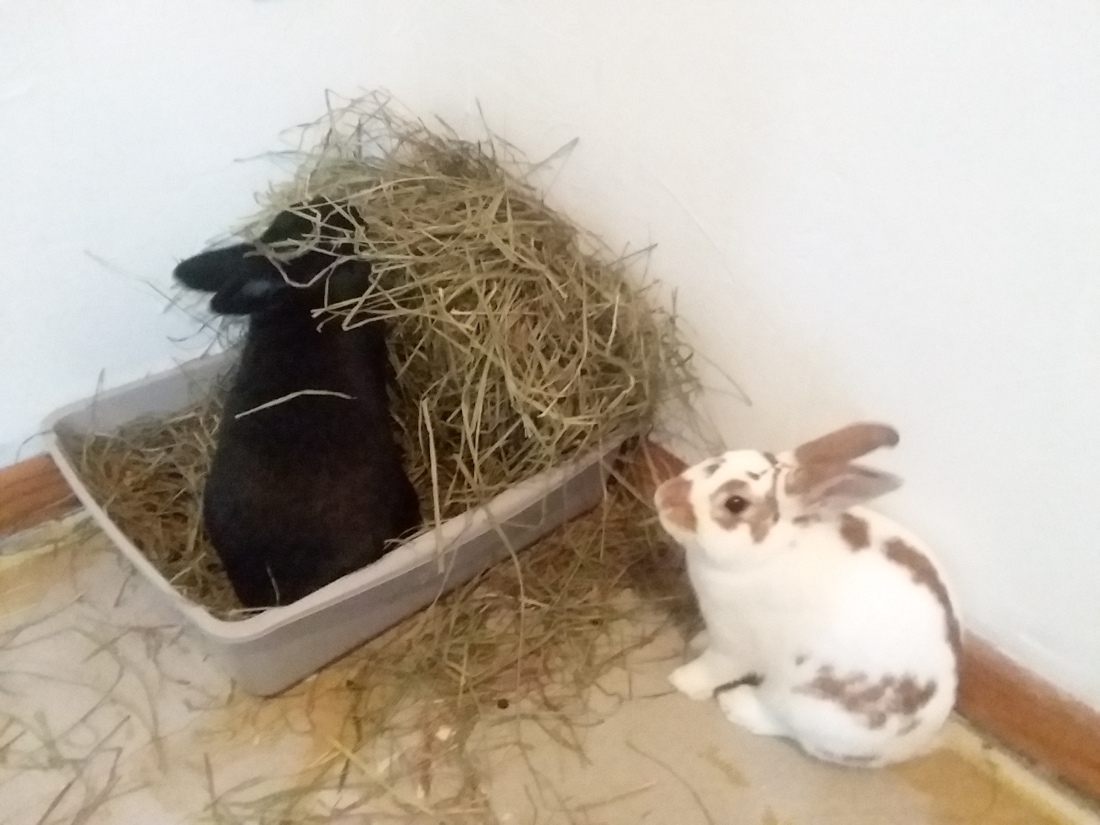
Setup Example…

20181106_171917

This is what it should look like with a proper litter box.


This is very off topic, but, this Christmas I would like to save up a bunch of donations to support a local pet shelter. This is going to be a complete surprise for them and would love for you guys to be a part of it. They rely completely on donation, fundraisers, and volunteers because they aren’t funded through the government. If you would like me to put up a donation fund on my blog, please leave a like!

Rabbit Feeding Amounts

Today, I will be talking about the amounts of this food that should be fed. If you haven’t seen my post from earlier, or my post about What To Feed a Rabbit, go check it out!

Veggie Feeding Amounts

When feeding veggies, a rabbit should be fed one cup of veggies per three pounds. Another way you can do it is to give however many leaves of lettuce per three pounds. An example would be: My bunny is 5 1/2  pounds. I give one leaf of each type of lettuce and a couple bits of parsley, cilantro, sage, etc. as a topper if wanted. Make sure that when you feed toppers (explained in my last post), that it is about a 1 to 6 ratio. One part or less of toppers and six parts main lettuce (also explained in previous post). Toppers are always optional and you should always focus on the main lettuce if anything. Don’t forget to rinse the veggies before feeding!

Hay Feeding Amounts

Your rabbit should get unlimited grass hay. The best place to give hay is either over a litter box, or in the litter box. This is simply because when rabbits go to the bathroom, they tend to enjoy eating hay at the same time due to their natural instinct to graze, similar to horses. As all food should be, make sure that the hay is fresh and that you can consistently give more and more fresh hay.

20181106_171917

This is an example of what it would look like with the hay in the litter box. This is my preferable option since your able to give as much hay as you would like to, unlike using a hay feeder, you can only stuff so much in. Using a hay feeder is nice since it doesn’t make a mess. If you want a nice, large hay feeder, feel free to make your own.

Water Amounts

Water should be provided in a bowl 24/7. Rabbits naturally drink as they do with a bowl, so giving them a bottle doesn’t allow them to get the water then need in the amount of time they have. It’s not fair to them, and water bottles can cause many problems including leaking, clogging, damaging rabbits teeth if they were to gnaw on it, and limiting the amount of water they take in. Refill and clean out the bowls daily.


Pellet Feeding Amounts

Pellets are actually optional to be fed, although I would recommend feeding veggies twice a day if that’s the case. If you want to feed pellets, you should feed our rabbit an 1/8 of a cup for every three pounds. Pellets give extra nutrients, but sometimes rabbits can grow allergic to pellets, but this is very rare of course. If you don’t want to feed pellets anymore, consult with our veterinarian.


If you haven’t caught on by now, this is for daily feeding. I recommend feeding veggies for breakfast and pellets or the other veggie salad for supper. Obviously, along with that you would be constantly be providing hay and water and making sure that all of the food is fresh.

If you ever have questions, feel free to comment. I’ll make sure to respond as soon as possible. Sorry I didn’t show examples of the pellet, water, and veggie amounts. I feel as though hay is the most important and that water is very obvious to everyone that it should be in a bowl. Along with that, the veggie and pellet amounts could vary. I didn’t want people feeding more or less than they needed based off of my rabbit’s weight and size.

Choosing High Quality Hay

So today I decided that I would post two blogs. This is simply because last blog, I kept babbling on about the importance of hay, but I never described what a good quality hay should look like and the effects it should or shouldn’t place on your rabbit. Stick around for my post later about feeding amounts.

What Should your Hay Be Like?

A high quality hay should be green, somewhat stiff, and you shouldn’t notice anything potentially dangerous mixed in. It may smell a little sweet. Orchard grass hay tends to smell more sweet than timothy hay. If you ever find yourself in a situation that you rabbit doesn’t like timothy hay, try orchard grass hay. Orchard grass, as I said before, is sweeter and softer. Picky rabbits tend to prefer orchard grass over timothy.

What Does Hay Even Do?

Hay is 80% of your rabbits diet. By knowing that, you can tell how important it really is. Hay is the main form of fiber for a rabbit. Rabbits need tons of fiber to keep their digestive track going. Lack of fiber can lead to sicknesses as dangerous as GI stasis, known as the silent killer of rabbits.

How To Tell Your Rabbit Is Getting The Fiber It Needs

Signs that your rabbit is lacking fiber may include the following.

Runny stools: Encourage more water and hay. If needed, give a hay that provides more fiber, such as timothy hay.

Lack of stool production: All you need to do is encourage more hay. If things don’t improve, things might become serious.

Pressing stomach and other sickness signs: If you notice your rabbits has bad gas, isn’t passing stools well, pressing their stomach to the ground, or showing overall sickness (Including the prevention of eating), you need to go to the vet immediately. Your rabbit most likely has GI stasis. If GI stasis isn’t taken note of soon enough, your rabbit could pass away in the next 24 hours. If you notice these symptoms, don’t stress. Try syringe feeding and then bring your rabbit to your vet. After that, do as the vet says. Stressing will be sensed by your rabbit and could make it worse.


A Little About Me

Thanks so much for joining me! I’m so glad you came. This blog is primarily for those who love bunnies, want a rabbit, are getting a rabbit, or even own a rabbit. I will be able to relate to many situations since if you didn’t know, both my sister and I own our own rabbits.  I plan to post about every other day and will continue to update you guys if there will be any event causing delays in posts. I hope you will tag along with me throughout our journey of rabbit care.

cropped-oliver

Oliver greets you in thanks!