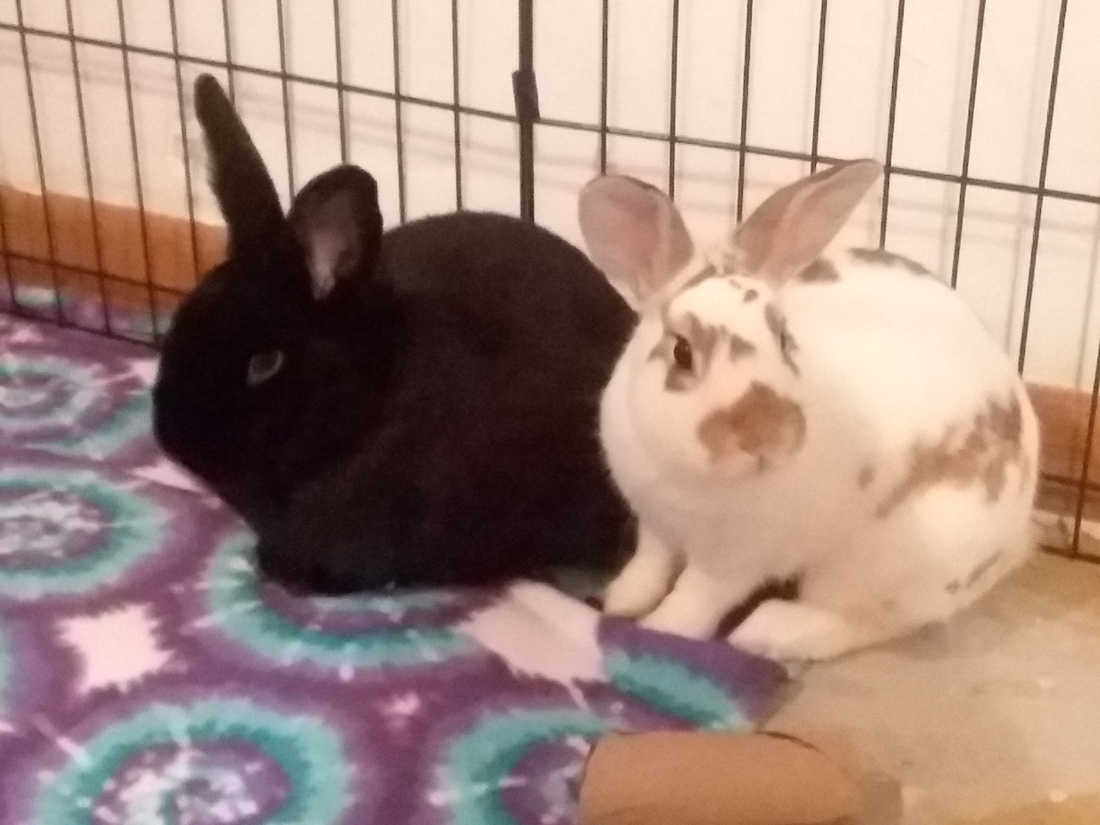
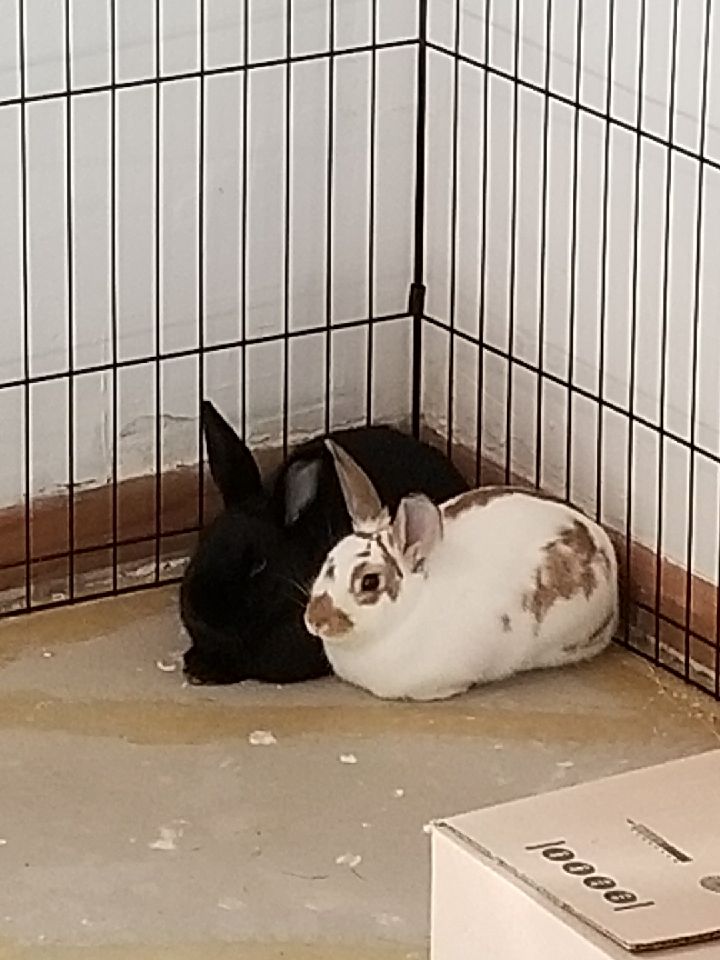
The Materials Needed & Recommended For Bonding a Pair of Bunnies

There are many materials recommended for rabbits that aren’t all that useful, but in some situations, maybe they could be. Today, these materials will get their stand and explanation of whether they will work for you. Many materials are necessary for every bonding session, but others, not so much, which is why this post will be going through what is necessary no matter what, and what will work for certain situations and techniques.

The Materials List:

  • Natural Treats: Natural treats are extremely easy to find, despite what you may or may not look for. For many rabbit owners, their first reaction would be to look for a packaged rabbit treat, but instead, I encourage any rabbit owner to use fruit for treats. This way, it’s so much easier to know what really is in the inside, not forget that it is so much cheaper, plus you can share!
  • Clothing That Won’t Attract Fur: The process of finding some sort of clothing that won’t attract, or show fur, is pretty hard. I find that grey athletic leggings, jeans, cotton shirts, and athletic sweatshirts aren’t all that bad. Check out my last bonding post from six days ago for more details. These clothing pieces should be found in any clothing store, if not, at sporting goods stores.
  • Carrier: A carrier or a small, enclosed area is necessary for stress bonding. This stress bonding session sounds and looks worse than it really is. Stress bonding is a great way to strengthen your rabbits’ relationships.

Why These Materials?

  • As for the clothing, it’s so easy to look in your closet, bins, dresser, whatever, and find clothing that won’t show, or attract, rabbit fur. The thing about rabbit fur is how fine it can become, along with how easily it sticks to all clothing, some more that the others. Personally, I feel that this is one of the most important steps, especially for anyone who lives with their family, who may or may not be bothered by a clump of fur stuck to your entire body.
  • Natural treats are great to reward your rabbit for their great behavior.
  • The carrier, like I said is a base/area where the rabbits will usually bond. This area is key to bonding rabbits.

Where to Find These Utensils & Materials:

Most of these materials can be found in these stores/areas:

  • Petstores
  • Hardware Stores
  • Convenience Stores
  • Home Goods Stores

Posting Dates and Times:

  • The Materials Needed and Recommended For Bonding a Pair of Bunnies: 9/23/2019: 7:15 P.M. Central Time, (USA)
  • The Giant Angora Rabbit Breed: 9/26/2019: 6:15 P.M. Central Time, (USA)
  • Rabbit Care Necessities: Rabbit Bedding: 9/29/2019: 5:25 P.M. Central Time (USA)
  • Bonding A Pair of Bunnies Step-By-Step: 10/1/2019: 5:30 P.M. Central Time (USA)

Rabbit Care Necessities: Bunny-proofing Supplies

The amount of times that bunny-proofing has made its stand on this blog is pretty large, but it’s all for a reason. Many rabbit owners don’t realize how simple bunny-proofing really is. With bunny-proofing, the amount of money that can be saved from destruction is quite insane.

Bunny-Proofing Shopping List

  • Cable protectors
  • Baby-proof outlet plugs
  • NIC grids
  • Zip ties
  • Natural Area Rug(s)/Sturdy rugs
  • Exercise pen(s)

Descriptions:

  • Cable protectors: Cable protectors are large plastic tubes with a minuscule slit in the top of which the cables can be slipped into. These cable protectors prohibit rabbit from targeting cables to chew on, and can protect the rabbit(s), and the cords from harm. These cable protectors can be found in almost, if not all, hardware stores.
  • Baby-proof outlet plugs: These outlet plugs are very well known for babies to prevent them from sticking their fingers in the outlets, the same goes for rabbits. Rabbit claws are susceptible to sliding into outlets, of which the rabbit may try to chew at the outlet in some way. The outlet plugs prohibit the rabbit from accessing the outlet, to then prohibit any injury. These plugs are available at nearly any store.
  • NIC/grids: NIC grids are small wire grids built together to form a large square of grids, which are usually used for organizers and shelving. These grids are absolutely amazing for blocking off small areas where the rabbit shouldn’t have access to. NIC grids are found at most home stores, if not, they can be found on Amazon.
  • Zip ties: Zip ties are lifesavers to most rabbit owners. Even though they may seem irrelevant, zip ties can really take a toll on your rabbit’s safety. With zip ties, putting together a barrier for a small area with the NIC grids is extraordinarily simple. Other rabbit owners use the NIC grids and the zip ties to make a cage door, or even a rabbit condo, it’s all up to the owner’s wants and needs. Zip ties are easy access in all hardware stores.
  • Natural Area Rug(s)/Sturdy rugs: Rabbit safe area rugs are a must for owning rabbits, more for those who don’t choose to use fleece and towels on the floor. These rugs are amazing for those who choose to free-roam their rabbit. These rugs allow a traction spot for the rabbit to run. With this, these rugs must be a sturdy and woven material without any fringes to be considered safe for rabbits. These rugs are most commonly found in home good stores.
  • Exercise pen(s): Exercise pens are magnificent for any large situations of which an owner may want to block off a very large area. With this said, these exercise pens have to be sturdy, tall, and long enough to work for a rabbit. Rabbit exercise pens should be made of a sturdy metal material, they should be pretty long, and should be at least 3 feet tall. These standard ensures that the rabbit will stay happy, healthy, and safe in their bunny-proofed area.

Reasons:

  • Cable protectors:
    • Save your cords
    • Save your rabbit
    • Save your money
  • Baby-proof outlet plugs:
    • Prevent chewing and clawing at and in outlets
    • Save your rabbit’s life
    • Prohibits hay from accidentally frying in the outlet
  • NIC/grids:
    • Prevent the rabbit’s access to unnecessary access spots, more commonly for small spots
    • Cage doors
    • Cage walls
    • Can be bent into a slotted cord organizer/shelf
  • Zip ties:
    • Repair cages and doors
    • Connect NIC grids
    • Reconnect doors to cages and carriers
    • Flip lid connector for hay racks
  • Natural Area Rug(s)/Sturdy rugs:
    • Allow appropriate traction
    • Prevent excess slipping
    • Padding to hocks
  • Exercise pen(s):
    • Prevent access to extremely large areas
    • Enclosure
    • Can be a cage itself

Posting Dates and Times:

  • Rabbit Care Necessities: Bunny-proofing Supplies: 9/21/2019: 4:45 P.M. CT., (USA)
  • The Materials Needed and Recommended For Bonding a Pair of Bunnies: 9/23/2019: 6:15 P.M. Central Time, (USA)
  • The Giant Angora Rabbit Breed: 9/26/2019: 6:15 P.M. Central Time, (USA)
  • Rabbit Care Necessities: Rabbit Bedding: 9/29/2019: 5:25 P.M. Central Time (USA)
  • Bonding A Pair of Bunnies Step-By-Step: 10/1/2019: 5:30 P.M. Central Time (USA)

Rabbit Care Necessities: The Exercise Pen

Exercise pens are very well known for pet dogs, but for whatever reason, many people out there don’t think to use them for other animals. Whether it’s for a cat to prohibit it from getting into an area, or for a rabbit from accessing dangerous areas of the house, these exercise pens are extremely important, here’s why.

Why Are Exercise Pens Necessary?

Many rabbit owners think that all rabbits need an exercise pen, but some really don’t. For the rabbit owners that choose to free roam, and bunny-proof, which I highly recommend, they really don’t need an exercise pen, they have the entire house! If you happen to choose to free roam your rabbit, some people may choose to use an exercise pen for bunny-proofing.

For those who aren’t free roaming, exercise pens are crucial for your rabbit’s health. Not only is it important give rabbits the 24/7 access to roam and play around, but they also need protection from certain areas of their room to prevent injuries. Rabbit exercise pens work great to spread across a wall as a barrier, and as an area for playtime outside of their usual area. Rabbits need plenty of enrichment from different areas of playtime, an exercise pen can make the process much easier.

Different ways to use exercise pens would be by making a wall to enlarge a rabbit’s area, rather than just a circle, but still blocking an area off. Another option would be to use the pen to prevent the rabbit’s access to a catastrophe of cords, or a large area of outlets that aren’t quite bunny-proofed. Some other ways would be using the pen for different playtime areas, for bringing a rabbit outside for playtime, etc.

What Are the Requirements For a Rabbit’s Exercise Pen?

The requirements that I would expect an exercise pen to meet, when regarding a rabbit would be that the pen should be sturdy, with an easy access door, and the pen has to be at least three feet tall. The reasoning behind this all is below:

Sturdiness:

Sturdiness is no surprise, especially when the subject is about containing an animal, in a safe, and reliable manner. Rabbits can be extremely stealthy animals, and making sure that a rabbit isn’t capable of escaping their pen is vital for your sanity, and their well being.

Easy Access Door:

An easy access door is great for those who are constantly going in and out. An easy access door is great for rabbit owners that have to go in and out of the pen to clean dishes, prepare veggies, grab hay, grab fleece, etc.

I find that having an easy access door on my rabbit pen is so extremely helpful, especially when the bunnies are following me around when my hands are full and my sister isn’t down in their room to help me. These rabbit pens can be very tedious, so staying in safe parameters is the best way to go.

At Least Three Feet Tall:

The reasoning behind why the pen should be at least three feet tall is very simple. Rabbits, by nature, are astounding at jumping ginormous heights, which brings in one of the most simple factors of keeping a rabbit safe, actually keeping them in their area.

If you find your rabbit outside of its pen, and there wasn’t any change to setup or positioning, I would recommend getting a taller exercise pen, just for your rabbit’s safety, and your own mindset and reassurance.

Where to Find Exercise Pens:

Pet exercise pens are practically everywhere, but I would recommend looking at online options for cheaper prices, or less there is a sale on an exercise pen in a store, then go right ahead. If I were you, I’d look into pens from the stores, and then resort to online stores, that way, you are allowing yourself to experience more options, and allowing yourself to have more fun.

Some places to look into for exercise pens would be:

  • Petco, Petsmart, or any generic pet store.
  • Hardware stores, such as Ace Hardware, Charlie’s Hardware, etc. The pens should be for sale in the pet section of these stores.
  • Otherwise, there are always the online stores, like Amazon, where literally everything is sold.


Posting Dates and Times:

  • Rabbit Care Necessities: The Exercise Pen: 9/15/2019: 4:55 P.M. Central Time, (USA)
  • Why Should Rabbits Be Kept in Pairs?: 9/17/2019: 5:25 P.M. Central Time, (USA)
  • The French Lop Rabbit Breed: 9/19/2019: 5:45 P.M. Central Time, (USA)
  • Rabbit Care Necessities: Bunny-proofing Supplies: 9/21/2019: 4:45 P.M. CT., (USA)
  • The Materials Needed and Recommended For Bonding a Pair of Bunnies: 9/23/2019: 6:15 P.M. Central Time, (USA)

Rabbit Care Necessities: Litter

Rabbit litter has been mentioned and talked about multiple times on the blog, but I feel that finding the correct litter for not only your situation, but your rabbit’s too. It’s so incredibly important to find a litter that fits your lifestyle and budget, along with what will work for your rabbit.

Finding the Right Litter For Your Situation, & Your Rabbit’s:

The following litter options that will be mentioned below will be hay, wood stove pellets, cat litter, paper bedding (Carefresh), and wood-stove pellets.

Hay:

There are rabbit owners that will use hay as litter, so that your rabbit can eat the clean hay, and ignore the soiled hay.

Reasons: Simple, easy to clean, convenient, and functional, very cheap.

To take into consideration:

  • Hay doesn’t absorb liquids
  • The pee may omit odors
  • The hay will be wasted
  • The litter pan will be very dirty without any protection

Wood Stove Pellets:

Wood stove pellets are great for anyone who happens to live in the country where wood stove pellets will be more commonly sold.

Reasons: Cheap, very easily accessed, absorption is definitely there.

To take into consideration:

  • May be dusty
  • Doesn’t have much of an odor control

Cat Litter:

Cat litter is absolutely great for anyone who already owns cats because you don’t need to worry about the new litter to buy.

Reasons: Very convenient, not too dusty, very helpful as for odor control reasons, some are environmentally safe.

To take into consideration:

  • Pretty expensive
  • Must be wood/paper pellets (no clay or clumping litter)
  • Has to be scent free to be safe for your rabbit’s respiratory system

Carefresh and Other Paper Bedding Brand:

Carefresh is great to get at pet stores for fun colors and different types of paper litter that is beneficial for the environment.

Reasons: Soft on hocks, very presentable,  makes exuberant and joyful themes.

To take into consideration:

  • Expensive
  • Isn’t very good with odor control, a better controlling litter will need to be underneath.
  • Dusty/messy

Horse stall Bedding:

Horse stall bedding pellets are great for easy access picking up at almost any store, and for great prices.

Reasons: Very cheap, convenient, very absorbent, odor control is great, wood smells nice, often found in bulk.

To take into consideration

  • The bag is often very heavy
  • Can be a little dusty, but not terrible overall

The Point of Litter:

The whole point of litter is to absorb liquids, that’s really what the run-down is. Even though finding the correct litter for your rabbit is a bit of a task because the average person would say something similar to, “It’s just litter,” finding the correct litter could save your rabbit’s life, and prevent plenty of pain.

Litter is very beneficial for many pets, and should be taken seriously, like any animal product should. The correct litter for the appropriate situation is key, so look out for the little tips that I gave out above, in case anyone would be willing to reread a bit.

What Happens to Rabbits Without Litter & Litter Boxes?

Obviously, for those who don’t know, any litter is meant to absorb fluids from pets, the most commonly known pet to use a litter box would be a cat. Rabbits are very similar in the way that cats would also use a litter box, besides the more serious side effects that come with avoiding the supplying process of a rabbit litter box.

I realize that this would most likely be the same for cats as well, but I feel that all cat owners already know that cats should have litter boxes, yet many out there don’t realize that rabbits should too.

The side-effects that come along when a rabbit isn’t properly litter box trained, or if the litter box isn’t even supplied include:

  • Potential indoor flystrike: Indoor flystrike is the same as usual flystrike, besides the fact that it is affecting an indoor rabbit. Indoor flystrike really is only possible if the rabbit has terrible hygiene, and if the litter and litter box isn’t properly cleaned and changed.
  • Other parasites and bug infestations: Realizing how many bugs and parasites come into access because a rabbit wasn’t given proper litter is just disgraceful. Keep in mind, these different creepy crawlies are also coming for you, because your rabbit lives in the same area as you. Why would anybody restrict a rabbit’s access to a litter box though? That’s like telling someone that they can’t use the toilet, even though they’re so easy access.
  • Matted fur: Matted fur isn’t all that bad right? WRONG! Matted fur can cause a rabbit’s set of stools to stick to it’s fur, which is a terrible situation to begin with, until the different illnesses that are more likely to occur show up because the stools are considered, it just makes everything even worse.

And the other side-effects that are guaranteed to occur and happen would be the terrible scent drifting around your house, along with the terrible hygiene that your rabbit was forced to live through. For most people, this alone would be enough to differ the person’s original perspective, but for others, maybe not. If this alone doesn’t persuade anyone, please read up on all of the predicaments that become major risks without proper litter and litter boxes.

Posting Dates and Times:

  • Rabbit Care Necessities: Litter: 9/9/2019: 5:45 P.M. Central Time, (USA)
  • Is a Pair of Bunnies Right For You? For Everyone? 9/11/2019: 6:00 P.M. CT., (USA)
  • The French Angora Rabbit Breed: 9/13/2019: 4:50 P.M. Central Time, (USA)
  • Rabbit Care Necessities: The Exercise Pen: 9/15/2019: 4:55 P.M. Central Time, (USA)
  • Why Should Rabbits Be Kept in Pairs?: 9/17/2019: 5:25 P.M. Central Time, (USA)

Rabbit Care Necessities: Litter boxes

Litter training rabbits can really take a toll on whether families will allow a rabbit into their home. I, personally, feel that litter boxes aren’t discussed enough, especially with pet store companies selling tiny litter boxes that aren’t even large enough for a dwarf rabbit, but advertise it for a small to medium bunny.

Why Are Litter Boxes So Important?

If a rabbit wasn’t litter box trained, or didn’t have a litter box in general, it would be like a dog just constantly using the house flooring for a toilet because it couldn’t go in the backyard, or it doesn’t have a backyard.

Litter box trained rabbits are noted to live a happier, healthier, and longer life than rabbits without a litter box, and aren’t trained. This is because when a rabbit doesn’t have a “toilet” to use, they just go anywhere, which means they have the chance of stepping, laying, whatever, in it. This also means that the feces and urine are building up over time, which could attract bugs and cause many bug invasions, along with diseases that could potentially be carried by that bug. Don’t forget that the building up feces and urine could also build up on the rabbit’s fur, which would definitely cause many predicaments, including indoor flystrike.

I’d also like to stress the importance of keeping a rabbit’s area tidy. I just mentioned how urine and stools can attract different insects, but when you have these bugs trapped in the shelter containing the rabbit, the flies, mites, fleas, whatever, are also trapped, which means your rabbit is stuck with all of these insects that could cause plenty of unnecessary harm, all because you didn’t supply a litter box.

Litter boxes are very easily accessible, and there really isn’t an excuse to avoid giving an opportunity for a much more pleasant life by litter training a rabbit. Rabbits are excellent at learning new skills, and take it quite seriously, plus you’re adding years to your rabbit. These years that I’m expressing and stressing about are the years that you could add on to your rabbit’s life through preventing serious diseases from insects, preventing stress from the illnesses, helping the rabbit’s respiratory that is struggling from the smell, last but not least, the hygiene that is required for every rabbit to live an astounding life.

Think of rabbit care in a human’s perspective, humans need the hygiene, care, and products to live a healthy and beneficial life, so do rabbits. This is why they need litter boxes, it’s a rabbit product necessity for a great life, it encourages amazing hygiene, and allows the rabbit great care through keeping them more hygienic than what it would be without a good quality litter box, or a litter box in the first place.

Are Small Litter Boxes Bad?

Yes, small litter boxes are terrible for rabbits. Not only do they restrict movement and comfort, but the odds of your rabbit actually making the feces in the litter box is highly unlikely, especially if it’s crammed and undersized.

The biggest problem with small litter boxes, is the size itself, if it’s small, it’s too small! Small litter boxes will limit the rabbit’s movement in the box, make the rabbit uncomfortable, and most likely stick the feces to the rabbit’s back end, or the side of the box, definitely nothing you want.

What is the Problem With Pet Store Litter boxes That Are Made For Small Animals?

Rabbits aren’t really all that small of animals, especially when you consider their size compared to the “small animal” litter boxes, specifically advertised for rabbits and guinea pigs, even though they’re barely a decent size for the average guinea pig.

Small animal advertised litter boxes are NOT in any way large enough for a rabbit of any size, not to forget that the sides aren’t even sides, and the box itself will need daily cleaning. These litter boxes aren’t appropriately sized, and no rabbit owner should ever feel tricked when it comes to buying an advertised, “appropriately” sized litter box.

What Do I Recommend For Rabbit Litter Boxes?

Personally, as a rabbit owner and a person who enjoys researching rabbit care, now for three years, I feel that the best litter box for a mini & small to large sized rabbit would be any large sized cat litter box, with high sides, and a great width to allow a full 360 degree turn for your rabbit, with plenty of space and comfort.

The reasoning behind this is quite simple. A rabbit that is anywhere from a mini sized breed, to a large sized breed, that is able to spin a full 360 degrees in the litter box, with comfort and ease, will be willing to use the box. This should show the owner that the rabbit is comfortable with the size, and it fits well for the breed and size. For a small breed of rabbit, I would look for lower sides if they are very short, if they can jump just fine, and don’t struggle with hock issues, or arthritis, then you’re all set.

For any giant breed rabbit, I would recommend purchasing a large plastic tub that is commonly used for storage purposes, to be used as their litter box. Storage boxes will usually have very high sides, and an amazing area the work with. This allows a giant breed rabbit to be able to move appropriately, still in a comfortable manner.

If you find that the box is still too small, I would recommend looking into a full sized, covered, cat litter box base, just focusing on the base, this will ensure that the litter box itself is large enough for your not so little rabbit. If you would like to invest in a covered cat litter box for your rabbit, go right ahead.

Covered Litter Boxes?

Covered litter boxes are amazing for rabbits, especially for those who find joy in kicking the litter and hay everywhere. The cover will prohibit the rabbit’s access to shooting feces, litter, and hay across the enclosure, from one, simple, foot-flick. Covered litter boxes are also amazing for anyone who hosts plenty of gatherings, because the roof and sides of the box is enough to enclose and hide the rabbit’s feces.

Posting Dates and Times:

  • Rabbit Care Necessities: Litter Boxes: 9/3/2019: 5:25 P.M. Central Time (USA)
  • How to Form a Bond With a Newly Adopted Rabbit: 9/5/2019: 5:45 P.M. CT. (USA)
  • The Florida White Rabbit Breed: 9/7/2019: 4:00 P.M. Central Time, AKA CT., (USA)
  • Rabbit Care Necessities: Litter: 9/9/2019: 5:45 P.M. Central Time, (USA)
  • Is a Pair of Bunnies Right For You? For Everyone? 9/11/2019: 6:00 P.M. CT., (USA)


Rabbit Care Necessities: The Rabbit Care Haul

As a rabbit owner, the ginormous rabbit haul before you get your rabbit is probably the second most exciting thing, besides getting your rabbit. I, personally, enjoy shopping, especially when it’s for my pets. This time, I’ll be going over the different materials you’ll want to get, how to make the trip even more fun than it is, and how to select and detect the acceptable, and unacceptable products. (And more)

Stores and Shops to Go to:

For the different stores I’ll be listing and giving advice for, I’ll be going over actual stores, and online stores. Personally, I’d recommend going to an actual store, just because there are usually more options, cheaper prices, and of course, more fun. If you don’t find what you want in a store, then of course, you could resort to online stores, but I would go to an actual store first, then resort to online.

In Person:

Like I just mentioned, I would recommend to going to a store in person for rabbit materials, or really any materials. In store, there are usually more options, cheaper prices, and I find it more fun. This is the first resort if you were to take my recommendations.

  • Petco: Be cautious of what you choose. They care more for the sale, not exactly the facts.
  • Petsmart: Same as Petco, be aware.
  • Dr. Foster and Smith: They know their facts, feel free to ask questions.
  • Joann’s: You’re just there for bedding so, there isn’t much to ask.
  • Hardware Stores: Not much to ask besides where the different litter options are.
  • Any other pet stores: Just be aware of what is and isn’t safe for a rabbit.

Online:

Online would be my second resort of choice. This is only because I find that getting out of the house, getting a bit of exercise, and shopping with other animal lovers around is just so much better. If you can’t find what you would like in store, then online would be the way to go, just make sure to give your eyes a break when you’re on electronics ;).

  • Pet store websites: Yet again, be cautious of the products
  • Binky Bunny: They know what they’re doing, you can trust them
  •  Dr. Foster and Smith: Again, they know their facts
  •  Small Pet Select: They REALLY know their facts
  •  Bunny Supply Co.: A great site with great products, just know your facts, just in case. (They do seem very trustworthy though)
  • Rabbit Youtubers’ Online Stores (101Rabbits, StormyRabbits, Etc.): Extremely trustworthy

Materials to Put on the Shopping List:

The following items that I will be listing will be in categories, the categories being: Food, Bedding, Litter/Litter boxes, Habitat, and Miscellaneous.

Food:

  • Timothy Hay (Adult Rabbits)
  • Veggies
  • Rabbit Safe Pellets That Contain Healthy Ingredients (Optional)

Treats:

  • All Natural Treats
  • One Ingredient
  • Fresh Fruits and Vegetables

Bedding:

  • Fleece
  • Towels (Old towels)
  • Foam Mats
  • Rugs

Litter and Litter boxes

  • Litter of Choice: Wood stove Pellets, Horse stall Pellets (My favorite), Yesterday’s News, Feline Pine, Etc.
  • Large Cat Litter box WITHOUT any sort of mesh, wire, etc.
    • High sides work best
    • Low sides for seniors
      • Can be cut down if necessary

Habitat:

  • Water Bowl
    • Large enough for at least three quarters of a glass of water
    • Changed 1-3 times a day
  • Exercise pen
    • At least three feet tall
  • Hidey House
    • Can be made out of a cardboard box
  • Hay Rack
    • Very easy to DIY

Miscellaneous:

  • Cat Nail Clippers
  • Rabbit Grooming Brush
    • Can be a DIY
      • All you need is a dog flea comb with large widths between the metal bristles that allow a cut rubber band to pass through.
  • Carrier
  • At Home Emergency Kit
    • Gauze
    • Baby Food
    • Critical Care
    • Syringe
    • Blood Clotting
    • Antiseptic
    • Pedialite
    • The Container itself

Making the Trip Even More Fun:

As a big shopper, the trip itself is already exhilarating and enjoyable, but for those out there that aren’t big into shopping, this section will help you out so that you aren’t complaining about how bored and annoyed you are, the average shopper, I know.

  1. Look at other items, despite the fact that you have things that you need for your rabbit, it’s still amazingly enjoyable to look through and buy the unnecessary items too.
  2. Look through the other animal items, because if you’re like me, you’ll find a way to make other animals’ items work for a rabbit.
  3. Look through all of the fun accessory items and the toys, really, please do, all of the exciting and adorable additives will be worth it when you get your rabbit.

Acceptable and Unacceptable Products: What to Look For…

This section is quite easy to interpret, but I would still like to incorporate how important it is to look at ingredients and the smallest little hints to interpret whether the product should be safe for a rabbit or not.

What to Look For:

What I prefer to do when I’m looking at a rabbit product, most likely food, is too look for what shouldn’t be in it. This way, the moment I find something that I wouldn’t want my rabbit in access of, I can immediately avoid that product, this way, you’ll save more time, more money, and prevent the stress of realizing how bad of a product you bought.

This is the same with toys. When looking for safe rabbit toys, avoid cloth toys to prohibit GI problems. Otherwise, what I will usually look to avoid in a rabbit toy would be corn of any sort, husk, artificial flavors, artificial colors, etc. These are the different additives that can potentially be very dangerous to rabbits, despite the fact that they like these materials most of the time, but please, avoid them.

These products will usually will have some sort of hidden description on the packaging. The hidden part is to prohibit lack sales, which shouldn’t be the case, but all that producers care about are the sales, not the thought or healthiness, at least this is the case for the usual chain pet stores, not exactly for other stores.

Acceptable:

Honestly, anything that isn’t unacceptable, should be okay for your rabbit. Please keep an open mind and use your brain and common sense. If rabbits can’t have corn husks, why would they be able to have corn? Plus, I have made a post on that subject.

Look for timothy hay, natural flavors, natural ingredients, one ingredient, etc. These are the main eye-catchers for a great quality rabbit product. Really any food with a small list of ingredients is a real eye-catcher.

Unacceptable:

Like I mentioned above, the different materials to avoid can be extremely hazardous, but so are the ingredients in some rabbit food too:

Food:

Food-wise, the additives and ingredients to avoid would be:

  • Corn
  • Added Sugars
  • Molasses
  • Wheat
  • Oils
  • Artificial Colors and Flavors
  • Any food that isn’t considered “safe” for a rabbit

Toys:

Like I mentioned before, the materials to avoid in rabbit toys would be:

  • Cloth and fabric chews
  • Treated wood
  • Artificially flavored chews
  • Corn or corn husk (anything corn)
  • Artificial colors

………………………………………………………………………………………………………………

Thank you so much for coming again to this post. If you found this post informational, please give this post a star and share this post with your family and friends. I post every other day, so if you would be willing to come back again then, that would be great. Until next time, continue to spread proper rabbit care, and I’ll talk to you soon.

Rabbit Care Necessities: The Room

To start off the chapter of Rabbit Care Necessities, the room of which the rabbit will go in, at least for me, was the first thing I had to figure out before anything else. Because it can be so incredibly annoying to figure out where your rabbit can go in your house, and where it can’t, and what should, and doesn’t need to be bunny-proofed, I would like to go over the basics.

Step 1: Discuss With Your Family

The 1st, and most important step is to discuss your thoughts with your family. By now, I would assume that you have already told your family that you want a rabbit, that you have done your research, and that you’re ready for the responsibilities, if not, do it as soon as possible, and make sure you take those three steps before continuing. If you don’t take those three steps before you go on with the rest of the process, you’ll find yourself stuck and lost in what you thought was going to be an easy process, it isn’t.

The best way that I found to talk to your family about owning a rabbit is when you’re in the car with one, or both, of your parents. This is a nice, private time to talk about you have been thinking about. This is what I’ve found easiest since your parent(s) are focused on the road, but are still listening in, this way, you don’t feel all that pressured if you happen to be nervous of their reaction. That being said, you really shouldn’t feel nervous about talking to your family. They provide your materials, and your life, to the point that I would expect that you would have good enough of a bond with one of your parents to at least talk to them.

Once you actually get on to talking to your parent/guardian, I would recommend the following:

  1. Considering the positives and negatives of all of the different options
  2. Coming up with multiple options
  3. And accepting your family’s concerns

This all ties in to come to the conclusion of how important it is to consider everything. If you think of a negative side of a location that you really want your rabbit in, don’t avoid it, because it will come back to you later, and trust me, your family will not be pleased the moment that they realize they missed a needed discussion, and that you had tricked them into letting your rabbit stay in that area.

Another important consideration is enforcing the positives. Even though you should still mention the negatives to avoid as many future conflicts, if your parents don’t want a rabbit, you will need to enforce as many positives as possible, including the great housing options that work for you, and your family.

With this being done, I would like to recommend writing down the different options and rate them based off of the amounts of positives and negatives. This way, you will know what your family thinks is best, and what you may want.

As for speaking to siblings about getting a rabbit, I feel that siblings are much more supportive of getting the rabbit than the parents, but they kind of adjust to it so quickly that it doesn’t really phase them. All in all, just make sure to keep them updated and aware of everything, and keep them on the positive side! In my situation, my sister was always on my side during this process, mainly because she was the one who got me into wanting a rabbit.

If you happen to live by yourself, this step will be very simple for you, you can either chose to skip it, or you could talk to yourself, which means you still get to skip this step, but you’ll still want to do the ratings for the different options to make the next step is as easy and thoughtful as possible.

Step 2: Make the Decision

The next step forward would be to make a firm decision, with your family, of where the rabbit will be staying, whether it’s in a designated room, if the rabbit will be in your room, or if the rabbit will be free-roaming. These would be the options that I would give. There shouldn’t be anything with caging up your rabbit, they naturally shouldn’t be caged, whether your family wants the rabbit caged or not, they should have access to a play area at all times.

In my case, and many other cases as well, I have found that parents and family members only want to go by the way that rabbits USED to be taken care of. The way that rabbits were kept, caged, and neglected, should never be the way that rabbits should be kept, especially with the facts we now know today.

Based off of the results from the different “scores” that each room or area that was given an option, this is where, I, personally, would make the decision based off of. From here, I would get into contact with my parents/guardians, and family, preferably face-to-face, to talk about the future location of which your rabbit will be staying. Once the decision is made, and all of your family members have agreed, you’re able to move on to the next step.

This step could be done solo if you live in your own house, or in an apartment, etc. In other words, if you live by yourself, all you would have to do is find what would work best with you, and based off of the results, you should be able to find the best option.

Step 3: Plan Out the Area

Now that your family has agreed on the area that you would like to keep your rabbit, the next step, if you haven’t already at this point, is to start planning out your rabbit’s area, along with the setup.

The fist step to this would be drawing the borders to the rabbit’s area on a piece of paper, this way, you can add in the different wall and areas, along with furniture that may or may not get in the way of the setup, this way, you can make arrangement ideas before you make the arrangements. Without this, the luck of making an arrangement that is sure to work, but doesn’t, would be in my manner. Because of this, you would end up having to redo everything, yeah, that would be my case without this planning, at least for me.

From here, I would show your plan to your family, to then figure out adjustments and options that will work for everyone, so that you don’t mess up as much with what you thought everyone was okay with, but wasn’t, and on, and on.

This is where a lot of the action comes in. At this point, you should have made up a plan of where the rabbit will stay, and the area, along with any furniture changes that will be taking place.

The changes to record would be:

  1. New items being put in
  2. Where the new items will go
  3. Whether any past furniture will be moved
  4. What will an won’t stay in the same place
  5. Past furniture’s new position

Step 4: Clean Up the Entire Area

The most activity-based part of this process, is cleaning up the entire area of where your rabbit will be staying. Whether you plan to get your rabbit in a week, a month, or 6 months, do it as soon as possible, because the more you procrastinate, the worse the future cleaning will be. The following steps I took to clean my bunnies’ area were:

  1.  Sweep and dust everything in sight. Whether your rabbit is getting a room to itself, or not, please do not ignore this step. Even if your rabbit is going to be free roamed, this gives your family an amazing opportunity to deep clean the entire house. The best time to do this is when you’re in the process of relocating furniture.
  2.  Vacuum, vacuum, vacuum. Vacuum like you’ve never vacuumed before because trust me, more dust will pop out of nowhere after sweeping and dusting. The more that can be disposed of, the better.
  3. Disinfect with a natural disinfectant. The disinfectant that I would recommend would be a 50/50 water and vinegar spray. Not only is this spray an extremely easy access disinfectant, this is also a room deodorizer, which can prohibit territory problems with a newly brought home rabbit, that just wants to feel comfortable in its new environment.
  4. Replace the newly cleaned furniture in its new spot. After a deep clean, you will want to place the furniture in its new position if it is being moved around. This way, you can get the furniture moved, and in its spot, as soon as possible, with less stress.

Extra steps to cleaning your rabbit’s area could include washing the floors thoroughly, painting the walls a different color, and/or washing the walls. This just gives the area a nicer touch, with great timing, and in a great manner.

Please keep in mind that this cleaning is what was needed for my rabbits’ area, and for my rabbits’ needs. This may not be the right order, cleaning method, or overall task for you, but this was just to give an idea of what I would recommend.

Step 5: Plan Out Playtime Areas

Using the same steps to figure out the room/area your rabbit will be living in, I would recommend looking into where you would like to bring your rabbit for playtime. This way, if your were to run into a predicament and you have to move your rabbit out of its area, you will know where the best place is to bring your rabbit.

With this, if you have found an area that would work for your rabbit’s playtime, please bring them to that area if you haven’t already. This way, your rabbit will become more and more used to the transit and process, along with the overall area when you need to bring your rabbit there. This will make moving your rabbit into that area so much smoother for any emergency, or task, needed in your rabbit’s area.

…………………………………………………………………………………………………………………


Thank you so much for coming back again for this post. If the information was helpful, please leave a like and share this post with your friends and family who are in the process of preparing for owning a rabbit. I appreciate all of the support. Please come back every other day for a new post, but until then, continue to spread proper rabbit care!

Schedule: This post: today, in two days: a rabbit bonding post, and in four days: a breed post
What To Feed A Rabbit Daily

Part of owning any animal is to have a daily routine with feeding. Today, I will be sharing what to feed and everything that is necessary to feed your rabbit.

Choosing Your Veggies

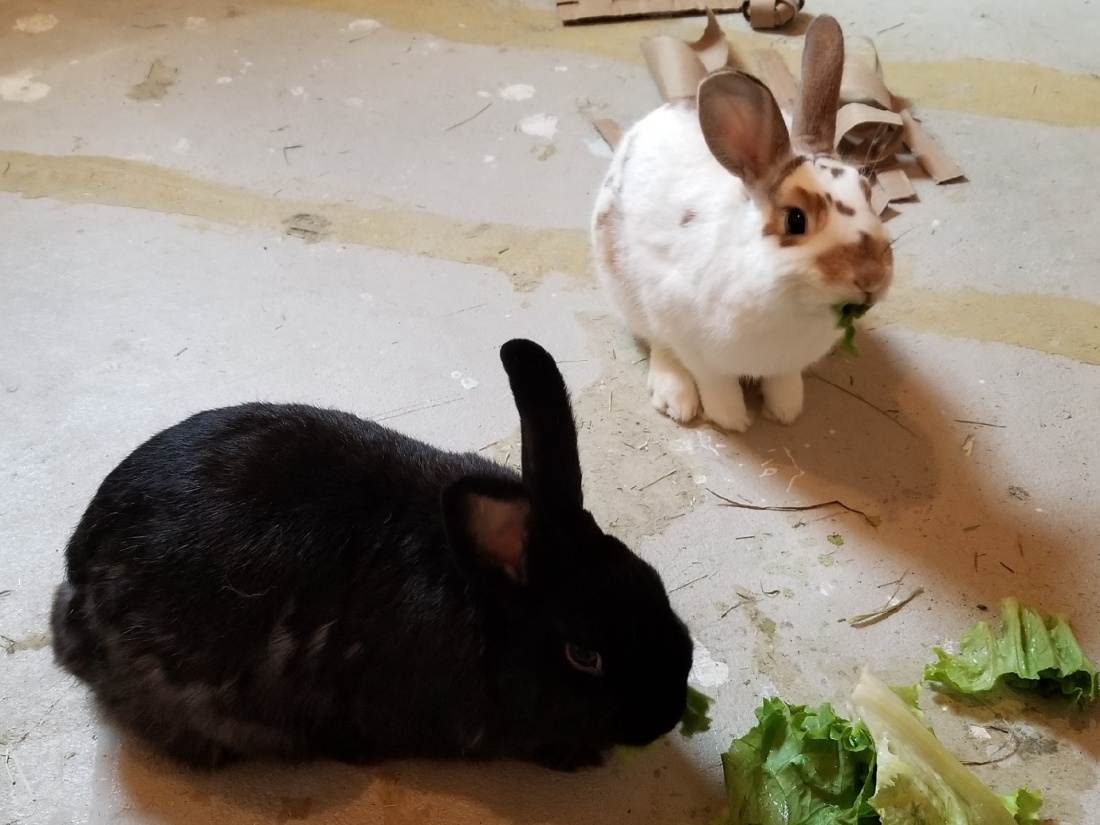
In the morning, you will be feeding your bunnies their “salad.” Here are some safe veggies that I recommend feeding: Romaine lettuces, red and green leaf lettuces, *kale, *spinach, cilantro, parsley, sage, etc.

  • If there is an * symbol, that veggie should only be fed once or twice a week due to the amounts of calcium in that particular veggie.

When you feed your rabbit its veggies, you should have at least two main veggies such as romaine lettuce or red/green leaf lettuce. Once you have your main veggie, you will want to pick out a topper. Toppers usually consist of herbs such as cilantro, parsley, sage, etc. If you feed kale or spinach, take note so that you don’t feed it too often.

If you ever wonder if a veggie is safe for bunnies, LOOK IT UP. Everyone tends to say that for everything, but if you find a reliable source, getting the correct information is as easy as ever. When finding a reliable source, see if they have any connections to owning rabbits. If you’re not sure, take a piece of information that you know is correct, and put them to the test. Looking something up on Google with no form of source is common when looking up if a veggie is safe, do not worry, you can trust that source. They will often list off more veggies that are safe too.

If your ever in doubt with whether you can trust that source, feel free to comment and I will get back to you!

Hay Supply

When owning a rabbit, You will need to always have unlimited grass hay on hand. You can buy it online if you would like, but you really don’t have to. If you can find a farm near you that has either timothy, orchard, or meadow hay that isn’t mixed with a source of alfalfa or clover hay, that will be beneficial for any rabbit, even little bunnies. Remember, you have to supply this hay 24/7 in large amounts, even if you don’t think they can eat that much, because they probably can.

If you own a baby bunny, you may be wondering weather you should get clover or alfalfa hay. You can, but once they hit six months, they have to be switched over to a grass hay (timothy, orchard grass, or meadow). Simply do this by mixing in grass hay gradually, adding more and more grass hay as the weeks go on.

Water Supply

Rabbits need unlimited water in a BOWL 24/7. If it is given through a bottle, your rabbit may not be able to access the amount of water they need for that day. Remember that you have to clean the bowls regularly. Both hay and water are needed for proper digestion. Did you know?: Rabbits drink as much as a 20 pound dog!

Pellets

When feeding pellets, you should be cautious of what’s in them. Look at the ingredients, if molasses is in the ingredients, be cautious due to how sweet it is. Too many sweets can harm your rabbit. A good pellet should have lots of fiber, not too much calcium, and shouldn’t have a bunch of sweeteners. Make sure it doesn’t have seeds, oils, and artificial products either.